

Watching someone you love disappear into addiction is one of the most painful things a person can go through. You know they need help, but figuring out how to convince someone to go to rehab can feel impossible. The truth is, the approach matters more than anything. It’s about combining structured compassion with a clear plan, all while choosing the right moment to open that door. For families in Dallas, finding the right local support can make all the difference.
Starting the Conversation About Rehab in Dallas

This is the conversation you’ve been dreading, but it could be the one that saves their life. Talking to a loved one about addiction requires a delicate mix of raw honesty and deep empathy. Your goal isn't to win an argument or shame them into a decision. It’s about creating a moment of clarity where they can see a path to professional help, right here in the Dallas area.
How you start this conversation sets the stage for everything else. Confronting them in the middle of a crisis or when you're angry will only build walls. Instead, plan a time to talk when you are both calm and have total privacy. Find a quiet moment in your living room in University Park or on a quiet evening at home in Plano, far away from any distractions.
Framing the Discussion with Care
Your words can either build a bridge or a wall. The key is to create a safe, non-judgmental space by leading with love and genuine concern. Avoid accusatory "you" statements, which instantly put people on the defensive.
Instead, frame everything from your perspective using "I" statements. This simple shift changes the entire dynamic from an attack to a heartfelt appeal.
Instead of: "You're always drinking and it's ruining our family."
Try: "I feel scared when I see how much you're drinking, and I'm worried about your health."
Instead of: "You have to stop this. Why can't you see what you're doing?"
Try: "I've noticed you've been in so much pain, and it hurts me to see you struggling like this."
This approach allows you to be honest about the very real consequences—the missed family events, the financial strain, the health scares—without shaming them. You're simply sharing your truth, and that's much harder for someone to argue with.
Key Insight: The goal of this first talk isn't to get an immediate "yes." It's to plant a seed. You're showing them they aren't alone and creating an environment where they feel safe enough to even consider that another way is possible.
Being Prepared with Real Solutions
Telling someone they need help is one thing. Showing them exactly what that help looks like is a thousand times more powerful. Before you even sit down to talk, do your homework. Having a concrete plan ready shows you're serious and removes the overwhelming logistics that can stop someone from taking that first step.
Your research should include finding a reputable addiction treatment center in Dallas that fits their specific needs. For example, if they need to keep working, a flexible outpatient program might be the answer. If they require serious medical support to stop safely, you'll want to have a center like Tru Dallas Detox, which offers medically supervised detox, ready to go.
Showing up with this information makes the path to recovery feel real and achievable. You can learn more about effective, non-confrontational communication in our guide on motivational interviewing for substance abuse, which helps you foster a collaborative dialogue.
These conversations are challenging, no matter the person's age. For more strategies on initiating these talks, you might find some great tips in this guide on convincing an elderly parent to accept help. At Tru Dallas Detox, our team is here to provide the compassionate, expert care your loved one deserves, starting with a simple, confidential phone call.
Navigating Their Fears and Objections to Treatment

When you finally put the word "rehab" on the table, brace yourself for pushback. It’s almost guaranteed to happen, but it’s not a sign you’ve failed. This resistance is a perfectly normal reaction, rooted in some very deep and very real fears.
For someone deep in their addiction, the idea of treatment can feel overwhelming. It can feel like admitting defeat, giving up control, or starting a painful, terrifying journey into the unknown. Their objections usually have very little to do with you. They’re driven by a genuine terror of withdrawal, crippling shame, or anxiety about losing their job and being separated from their family.
Your job isn't to win an argument. It's to listen, let them know you hear their fears, and then gently counter the denial with calm, practical solutions.
Addressing Common Excuses with Compassion
You’re going to hear a lot of reasons why "now" isn't the right time or why the problem isn't "that bad." Instead of getting drawn into a fight, try to hear the fear behind the excuse and respond with supportive facts.
Here are some of the greatest hits you can expect:
"I can quit on my own." This is the classic. The best response isn’t to argue, but to validate and educate. Try: "I know how strong you are, and I have no doubt you've tried. But addiction physically changes your brain, making it almost impossible to stop without medical support. A Dallas detox center like Tru Dallas Detox can make that process safe and so much more bearable."
"It’s not that big of a deal." This is pure denial. Your role is to be a gentle mirror. Use specific, non-judgmental examples: "I hear you, but when I see what this is doing to your health and how it's impacting our family, it feels like a very big deal to me. I'm scared."
"Rehab is for rock stars and criminals." Stigma is a huge wall to climb. Normalize the experience for them: "So many people right here in our Dallas community—nurses, teachers, business owners—get help every single day. Addiction is a medical condition, not a character flaw. Tru Dallas Detox helps people from all walks of life."
"I can't leave my job or my family." These practical fears are completely valid. Meet them with solutions: "I understand that 100%. That's why I've already looked into it. Tru Dallas Detox offers flexible programs, and laws like FMLA are there to protect your job. We can find a way to make this work for our family."
When you hear "I'll quit tomorrow," remember that addiction is a disease of procrastination. Your gentle persistence is a lifeline, reminding them that today is the day change can begin.
Demystifying the Fear of Detox
For many, the single biggest obstacle is the fear of withdrawal. If they’ve ever tried to quit "cold turkey" at home, they know the physical and psychological agony that can come with it. That experience may have convinced them that stopping is simply impossible.
This is where you can offer a powerful message of hope.
Explain that modern, professional detox has absolutely nothing in common with going it alone. At a medically supervised addiction treatment center in Dallas, like Tru Dallas Detox, a clinical team is there 24/7. They use proven medications and therapeutic support to manage withdrawal symptoms, making the process as safe and comfortable as it can possibly be.
Reassure them that they won't be left alone to suffer. They will be in the hands of compassionate experts whose entire job is to get them through it safely. At Tru Dallas Detox, we build a personalized plan to make this transition manageable, prioritizing safety and comfort from the moment someone walks through our doors.
Turning "No" into "Maybe" with Facts
Sometimes, a hard fact can cut through the emotional noise when nothing else can. While many people believe they can quit on their own, the data tells a much different story.
For instance, while it's true that over 75% of people relapse within a year after alcohol treatment, here’s the crucial part: only about 20% ever return to their previous, severe levels of drinking.
Even more importantly, research shows that longer, more structured programs can boost long-term success rates to as high as 50%. You can explore more about the effectiveness of professional rehab on ChangingTidesOBX.com. By sharing numbers like these, you reframe rehab. It’s no longer a punishment—it's their best strategic shot at getting their life back.
How to Motivate Change with Hope and Facts
When you’re watching someone you love struggle with addiction, it’s easy to think that ultimatums and dire warnings are the only way to get their attention. But that approach almost always backfires. It causes them to shut down, get defensive, and pull away.
The real catalyst for change isn't fear; it's hope. The key is to completely reframe the conversation. Rehab isn't a punishment for past mistakes—it's a strategic, science-backed path toward a future they can actually feel good about.
When you can present treatment as a proven solution, you start to dismantle the shame and stigma that keep them stuck. You shift the focus from worst-case scenarios to what’s genuinely possible. This means arming yourself with a few key facts to build a compelling case for why getting professional help is their most hopeful choice.
Shift from Punishment to a Proven Medical Strategy
First things first: addiction is a recognized, treatable chronic illness, not a moral failing. Framing it this way is not just a kinder approach—it’s the medically accurate one. When you make that shift, you lift the crushing weight of shame and allow them to see their situation through a clear, clinical lens.
You can explain that just like someone with diabetes or heart disease, managing addiction requires expert guidance, specific tools, and ongoing support. It’s not about a lack of willpower. Their brain chemistry has literally been altered, and it takes more than sheer will to heal. This is where a top-tier addiction treatment program in Dallas becomes the logical next step, offering medical and therapeutic care designed to address those physical changes.
Recovery isn't about becoming a different person; it's about returning to the person they were meant to be before addiction took over. By focusing on treatment as a health strategy, you make the idea of rehab less intimidating and more empowering.
Someone deep in their struggle often feels like a complete failure. Highlighting that addiction is a medical issue can be a profound relief. It allows them to see that asking for help is no different than going to the hospital for a broken leg. It’s the smart, logical thing to do.
This table breaks down some common communication pitfalls and offers a more effective, hope-based alternative for your conversations.
Communicating Hope vs. Fear
| Ineffective Approach (Fear-Based) | Effective Approach (Hope-Based) | Why It Works Better |
|---|---|---|
| "If you don't go to rehab, you'll lose your job and our family." | "I'm worried about what will happen if things continue, but I believe in you. Let's look at how treatment at Tru Dallas Detox can help you get back on track." | It replaces a threatening ultimatum with an expression of concern and belief in their ability to recover, inviting collaboration instead of conflict. |
| "You're ruining your life and you need to fix this." | "I can see how much you're hurting. Addiction is a medical condition, and there are proven treatments that can help. This isn't something you have to fix alone." | This removes blame and shame, framing addiction as a health issue that requires professional care, just like any other chronic illness. |
| "Think about how much you've hurt everyone around you." | "I know a future is possible where you feel healthy and we can reconnect. Professional help can give you the tools to get there." | It shifts the focus from past guilt to future possibility, offering a vision of hope and healing rather than dwelling on painful history. |
As you can see, the hope-based approach isn't about ignoring the reality of the situation. It's about framing the solution in a way that empowers your loved one to see a path forward, rather than cornering them with fear.
Use Success Rates to Build Confidence
Vague promises of "getting better" just aren't enough. Your loved one needs to see that recovery isn't just a long shot—it's a probable outcome with the right support. This is where data becomes one of your most persuasive allies.
Imagine sitting down and sharing this with them: studies show that rehab success rates for long-term sobriety are around 40-60%. That number is on par with the success rates for managing other chronic conditions like hypertension (50-70%) or asthma (50-70%).
You can find more detailed insights about rehab success rates on UnitedRecoveryProject.com. This simple comparison can be a lightbulb moment. It proves that recovery is an achievable medical goal, not some impossible dream.
Connecting Data to Dallas-Based Solutions
These statistics become even more real when you can tie them to concrete, local options. Your research shows them that the road to recovery isn't some abstract idea—it’s a real plan with a real address, right here in the Dallas area.
You can explain that a facility like Tru Dallas Detox doesn't just offer a one-size-fits-all program. Our team of experts provides a multi-layered approach, including:
- Medication-Assisted Treatment (MAT): For people struggling with opioid or alcohol addiction, MAT can effectively manage withdrawal symptoms and cravings, significantly improving the chances of a successful, lasting recovery.
- Dual Diagnosis Care: So often, people use substances to self-medicate for underlying issues like anxiety or depression. We treat the addiction and the mental health condition at the same time, which is absolutely critical for long-term wellness.
- Personalized Therapy: Through one-on-one and group therapy, our clients dig into the root causes of their addiction and start building the healthy coping skills they'll need for life.
When you can explain these specific services, you show them that modern treatment is a sophisticated, personalized strategy. Your preparation sends a powerful message: "I believe in you so much that I've already found a trusted Dallas detox center that can give you the best possible chance at a new life."
Considering a Formal Intervention in Dallas
When your one-on-one conversations feel like they’re hitting a wall and the denial is just too strong to break through, it might be time for a more focused approach. A formal intervention is a big step, but I've seen it be the one thing that finally creates a moment of clarity for someone who can't see how serious their addiction has become.
Forget the high-drama scenes from TV. A real, effective intervention is a calm, compassionate meeting led by a professional. The goal isn’t to shame or ambush your loved one. It’s to surround them with the people who care about them most and present a clear, united message of love and a path to help.
What a Professional Intervention Involves
A successful intervention isn't a spontaneous confrontation—it's built on careful, deliberate planning. A certified interventionist guides the process, making sure the conversation stays supportive and focused on the only goal that matters: getting your loved one to accept help.
It’s a structured process that usually includes a few key parts:
- Building the Team: The interventionist helps you gather a small, dedicated group of family and close friends. These are people who have been directly affected but are still deeply committed to your loved one’s well-being.
- Writing Impact Letters: Each person writes a letter to read aloud. This isn’t about blame or anger. It’s about sharing specific, fact-based examples of how the addiction has hurt you, all framed with love and concern.
- Rehearsing the Conversation: The specialist will walk everyone through the plan, preparing the group for how to respond to denial or anger and ensuring the message stays unified and compassionate from start to finish.
An intervention is a powerful act of love. It’s the collective voice of a support system saying, "We see your pain, we will not watch you suffer anymore, and we have a solution ready for you right now."
Having a concrete treatment plan ready before the intervention is non-negotiable. This means you’ve already picked out a premier addiction treatment program in Dallas, confirmed their insurance is accepted, and pre-arranged admission with a facility like Tru Dallas Detox. You want to remove every single obstacle, making it as easy as possible for them to just say "yes."
This flowchart shows just how clear that path can be. It's a structured journey from the chaos of addiction to the support of rehab and onto the hope of long-term recovery.
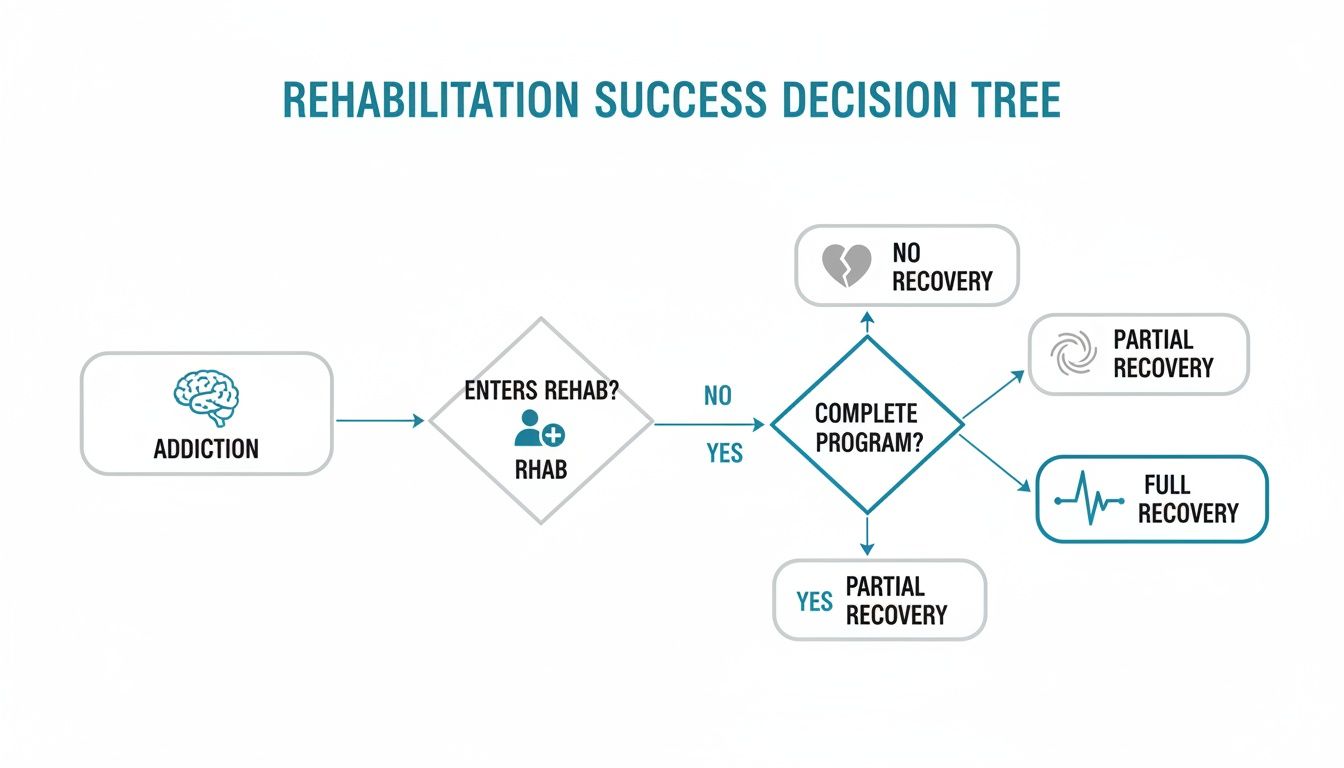
There is a clear, guided process that works. The path to sustained recovery becomes so much more achievable with the right professional support from the very beginning.
Setting Firm Boundaries if They Refuse Help
One of the hardest—and most important—parts of an intervention is deciding on the boundaries you'll enforce if they refuse help. This isn't a punishment. It's about protecting your own well-being and finally stopping the cycle of enabling that allows the addiction to continue.
These consequences have to be firm, loving, and something everyone on the team agrees to uphold. This could mean no longer giving them money, refusing to make excuses for them, or even asking them to find another place to live. The message is simple and powerful: "We will do anything to support your recovery, but we can no longer support your addiction." You can get more in-depth strategies if you read our complete guide on how to stage an intervention.
In the most extreme cases, where substance use creates an immediate danger to themselves or others, you may need to look at legal options. For these crisis situations, understanding the involuntary commitment law in Texas can be a critical step. While it's truly a last resort, it's an important option for ensuring everyone's safety.
Ultimately, an intervention is about creating a moment so powerful that the love in the room makes choosing recovery the only clear path forward. At Tru Dallas Detox, our admissions team can connect you with experienced interventionists in the Dallas-Fort Worth area. We'll have a space ready the moment your loved one agrees to get the help they so desperately need.
Taking Action with Dallas-Fort Worth Treatment Options
When your loved one finally agrees to get help, it’s a moment of both incredible hope and urgency. That "yes" is a precious window of opportunity, and you have to move quickly. Having a clear plan for accessing care right here in the Dallas-Fort Worth area is the key to turning that moment into real action.
This is where you let go of the logistics and let an expert team take over. Your job is to provide support; our job is to handle the details. The very first step—the one that sets everything else in motion—is calling an admissions specialist at a trusted local treatment center. Our compassionate coordinators at Tru Dallas Detox are trained for this exact moment. They understand the urgency and will start the process immediately.
What to Have Ready for the Call
To get the ball rolling as fast as possible, it helps to gather a few pieces of information. Don't worry if you don't have every single detail. The admissions team is there to help you fill in the blanks, but coming prepared helps them get a clear picture of your loved one's needs from the very first conversation.
This ensures they are guided to the right level of care from day one.
- Substance Use History: What are they using, how much, and for how long?
- Mental Health Information: Do you know of any co-occurring conditions like depression, anxiety, or past trauma?
- Medical History: Note any known health issues or current medications.
- Insurance Details: If you can, have their insurance card handy. Our team at Tru Dallas Detox can quickly verify PPO insurance benefits to determine what's covered and explain any out-of-pocket costs.
The most important thing to remember is that you are not alone in this. From the moment you call, a dedicated team is on your side, working to clear the path to recovery and secure a spot in a premier Texas treatment facility.
Understanding the Different Levels of Care
Addiction treatment isn’t a one-size-fits-all solution. A top-tier facility like Tru Dallas Detox will always recommend a level of care based on a clinical assessment of your loved one’s specific situation. Here are the most common starting points available right here in DFW:
Medically Supervised Detox
This is the non-negotiable first step for anyone with a physical dependence on substances like alcohol, opioids, or benzodiazepines. In a dedicated Dallas detox center, withdrawal is managed with 24/7 medical supervision to keep them safe and as comfortable as possible. Tru Dallas Detox specializes in this critical first stage of recovery.
Residential or Inpatient Care
After detox, residential treatment offers a structured, supportive environment free from the triggers of daily life. This is where the deeper work begins, giving individuals the intensive therapy needed to build a solid foundation for sobriety.
Intensive Outpatient Program (IOP)
For those with a stable and supportive home environment, IOP provides a more flexible path. They'll attend therapy at the facility for several hours a day, multiple days a week, but continue living at home and often maintain work or school commitments.
Medication-Assisted Treatment (MAT)
Especially for opioid and alcohol use disorders, MAT is a game-changer. It combines FDA-approved medications with counseling to reduce cravings and withdrawal, dramatically improving the odds of a successful, long-term recovery.
The road to recovery is a journey, not a single event. It's a fact that nearly 75% of people with addiction recover in the long term, and while relapse can be part of the process, rates drop from 40-60% early on to just 15% after five years of sobriety. Discover more about recovery statistics and the journey on RecreateOhio.com. Getting into a structured program is a proven path worth fighting for.
Once you have that "yes," the time to act is now. You can explore more about local treatment solutions in our drug rehab Dallas guide. Call Tru Dallas Detox today for a confidential assessment and let us help you secure their place.
Common Questions About Getting a Loved One Into Rehab in Dallas
Even after you’ve had the tough talks, researched your options, and maybe even tried an intervention, it’s normal for questions and doubts to creep in. Trying to navigate the path to recovery, especially right here in the Dallas-Fort Worth area, can feel overwhelming.
This section is here to give you direct, clear answers to the most pressing questions we hear every single day from families figuring out the next step. Our goal is to give you the clarity and confidence you need to move forward.
What If They Still Say No to Rehab?
It's one of the most painful moments imaginable: you've poured your heart out, laid out a clear path to help, and they still refuse. This is the exact moment where your healthy boundaries become non-negotiable.
Remember, these boundaries aren’t about punishment. They’re about protecting your own well-being and, just as importantly, stopping the cycle of enabling the addiction.
This means you absolutely must follow through on the limits you’ve set. It might mean cutting off financial support, refusing to make excuses for them, or enforcing any other consequences you’ve already discussed. It’s often the harsh reality of facing the consequences of their addiction without a safety net that finally convinces someone they can't do it alone.
Make it clear that you love them, but you cannot support their addiction. Let them know the offer for help at a premier Dallas addiction treatment facility stands, ready for the moment they are. The admissions team at Tru Dallas Detox is always here to give families guidance when they find themselves in this heartbreaking situation.
Can I Force Someone into Rehab in Texas?
Legally, yes, it is possible in Texas to have someone involuntarily committed for substance abuse. But I have to be clear: the process is incredibly complex and should only be considered as an absolute last resort. It requires a court order and undeniable evidence that their substance use makes them a significant danger to themselves or others.
A compassionate conversation or a professionally guided intervention is a far more effective and healing first step. Recovery has the greatest chance of success when a person chooses to participate, even if that choice is heavily influenced by their family's love and concern.
Before you even think about legal routes, we strongly urge you to speak with a certified interventionist or our own admissions team at Tru Dallas Detox. We can help you explore every other option to encourage them to enter treatment voluntarily. That collaborative spirit is the foundation for a much more successful treatment experience.
How Do We Handle Insurance and Taking Time Off Work?
"How will we pay for this?" and "What about their job?" These are two of the biggest roadblocks that stop people from getting help. The good news is, these logistical hurdles are completely solvable when you have experts on your side.
Your very first move should be a confidential call to a treatment center’s admissions team.
At Tru Dallas Detox, this is a huge part of what we do. Our team is skilled at handling these details and can:
- Quickly and confidentially verify PPO insurance benefits so you know exactly what’s covered and what any out-of-pocket costs might be.
- Explain how the Family and Medical Leave Act (FMLA) can legally protect your loved one’s job while they get the help they need.
- Provide all the necessary paperwork to make the transition from their workplace to our Dallas detox center as smooth as possible.
The message you can give your loved one is simple and powerful: The practical stuff is handled. Let us take care of the paperwork so you can focus on getting well.
What Happens Right After I Call a Dallas Detox Center?
Making that first call kicks off a simple, supportive, and 100% confidential process designed to move fast. When you call Tru Dallas Detox, an admissions coordinator will do a quick pre-assessment over the phone to get a clear picture of your loved one's situation—their substance use history, any mental health concerns, and their immediate needs.
From that conversation, we immediately start the insurance verification and figure out the right level of care, whether that's medical detox, residential treatment, or an outpatient program.
If our center is the right fit, we can often schedule an admission within 24 hours. Our entire focus is on making this process as quick and seamless as possible. We know how critical it is to capture that small window of willingness when your loved one finally agrees to accept help.
The road to recovery begins with one brave step. At Tru Dallas Detox, our compassionate team is ready to walk with you and your loved one through every part of this process, from that first phone call to a future of lasting wellness. Don't let this window of opportunity close—contact us now to verify insurance or schedule a confidential assessment.