
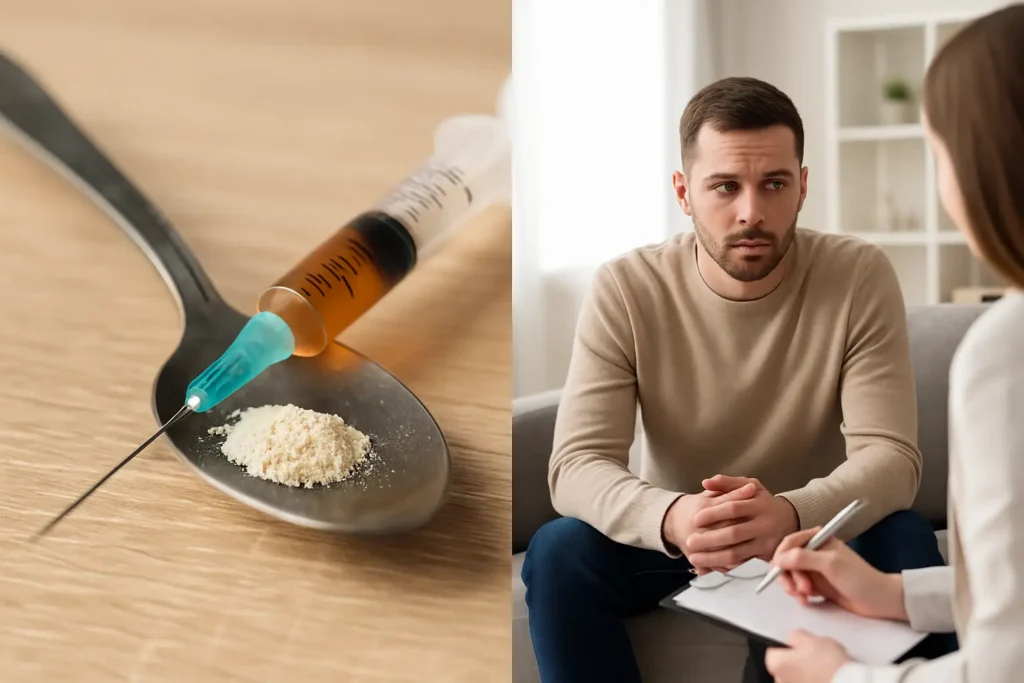
If you are searching this while someone you love is sweating, vomiting, shaking, or panicking – you are not alone. A lot of families hit the same wall fast: you can tell heroin is causing serious harm, but you do not know whether you need “detox” or “rehab,” and you do not have time to guess.
Here is the plain truth. Detox and rehab are both treatment, but they solve different problems. Detox helps the body stabilize and get through withdrawal safely. Rehab helps the brain and life patterns change so the person can stay sober after the acute crisis is over. Most relapses happen when people do detox only, feel better, and go right back to the same stressors, triggers, and routines that fueled use in the first place.
Heroin detox vs rehab differences in one sentence
Detox is medical stabilization during withdrawal; rehab is structured therapy and daily support that addresses cravings, mental health, and relapse risk after withdrawal.
That difference matters because heroin withdrawal can feel unbearable, but feeling better is not the same as being protected from relapse.
What heroin detox actually does (and what it does not)
Heroin detox is the short-term, medically focused phase of care. The goal is to keep a patient safe, as comfortable as possible, and medically stable while opioids leave the system and the body recalibrates.
Most people picture detox as “getting the drug out.” Clinically, it is more about managing what happens when the drug is gone. Withdrawal can cause severe flu-like symptoms, insomnia, agitation, muscle and bone pain, nausea, diarrhea, dehydration, and spikes in anxiety. For some people, especially those with heart issues, uncontrolled blood pressure, or co-occurring mental health conditions, the stress of withdrawal can become medically risky.
A medically supervised detox team typically focuses on monitoring vital signs, hydration and nutrition support, symptom relief, sleep support, and safety planning. Depending on the person, detox may also include medication-assisted treatment (MAT). MAT is not “trading one addiction for another.” In an appropriate plan, it is a stabilizing medical tool that can reduce withdrawal distress and cravings so patients can actually participate in therapy and make clear decisions.
What detox does not do is rebuild daily coping skills, treat trauma, repair relationships, or create a relapse-prevention plan that holds up when cravings hit at 11 p.m. on a stressful Tuesday. Detox can open the door. It is rarely the whole solution.
What heroin rehab does after detox
Rehab is where recovery becomes practical and sustainable. Once the body is stable, the work shifts to the patterns that keep opioid use going: reward pathways in the brain, stress responses, mental health symptoms, and the day-to-day triggers that lead to “just one more time.”
In a quality rehab program, the days are structured on purpose. That structure is part of the treatment. You are practicing a different rhythm: waking up sober, eating regularly, showing up to therapy, learning to sit with uncomfortable feelings, and making choices that do not revolve around finding relief through heroin.
Rehab commonly includes individual therapy, group therapy, skills-based counseling (like relapse prevention and emotional regulation), family support, and planning for what happens after discharge. If a patient has depression, anxiety, bipolar disorder, PTSD, or another co-occurring condition, rehab is also where integrated dual diagnosis care matters. Treating opioid use without treating the underlying anxiety or depression is one of the fastest ways to end up back in the same cycle.
Timeline: how long detox vs rehab usually takes
People want exact numbers, but the honest answer is: it depends on use history, overall health, other substances involved, and mental health.
Heroin withdrawal symptoms often begin within hours of the last use, usually peak in the first few days, and then ease over the next week. That does not mean cravings disappear in a week. Post-acute symptoms can linger – low mood, sleep trouble, irritability, and strong cravings can pop up unexpectedly.
Detox is often measured in days. Rehab is often measured in weeks, sometimes longer, because it is not only about stopping heroin. It is about building enough stability that the next craving does not turn into a relapse.
If someone has been using fentanyl-contaminated heroin or mixing heroin with alcohol, benzodiazepines, or stimulants, the timeline and medical needs can change. This is one reason a phone call with an admissions clinician can be more helpful than trying to self-diagnose from a checklist.
Setting: where detox happens vs where rehab happens
Detox can occur in different settings, but heroin withdrawal is one of the most common reasons people benefit from medical supervision. In a medically supervised environment, staff can respond quickly to dehydration, high anxiety, uncontrolled vomiting or diarrhea, and mental health emergencies. The goal is to prevent complications and help the patient stay in treatment long enough to stabilize.
Rehab may be inpatient (residential) or outpatient, depending on risk level and stability. Inpatient rehab is often the right fit when relapse risk is high, the home environment is unsafe or triggering, mental health symptoms are significant, or a person has tried outpatient care before and could not maintain sobriety. Outpatient programming can work well for people with a stable home, strong support, reliable transportation, and the ability to stay away from triggers between sessions.
The key difference is intensity and containment. Detox contains the medical crisis. Rehab contains the early recovery period when judgment is still healing and cravings can be intense.
Safety: why “detoxing at home” can backfire
Some people try to detox at home because it feels private or less expensive. The risk is that withdrawal distress and insomnia can become so intense that a person uses again just to make the symptoms stop. That is not a moral failure. That is biology.
There is also a major overdose danger after a break from opioids. Tolerance drops quickly. If someone returns to the same amount they used before detox, the body may not handle it. This is one reason detox should not be a standalone plan. The days right after detox are a vulnerable window, and rehab or a step-down level of care helps protect that window.
How to decide what level of care you need right now
When people ask, “Do we need detox or rehab?” the best clinical answer is often: detox first, then rehab. But there are exceptions and personal factors.
If the person is actively using heroin daily, has a history of severe withdrawal, has co-occurring mental health symptoms, or has been using multiple substances, medically supervised detox is usually the safest starting point.
If the person has already completed detox but keeps relapsing, that is not proof rehab “doesn’t work.” It is often proof that treatment was not long enough, not the right level of care, or not addressing what is driving the use. Rehab can be the missing piece because it treats the relapse process, not only the withdrawal.
If someone is medically stable, highly motivated, and has a strong home environment, outpatient rehab may be enough. If cravings are relentless, the home is chaotic, or friends and dealers are one text away, inpatient rehab can provide the breathing room to get real traction.
The role of MAT in detox and rehab
MAT can be part of detox, rehab, and aftercare. For opioids, medications may reduce withdrawal symptoms, decrease cravings, and lower overdose risk. This can be especially important for people who have relapsed repeatedly or who experience overwhelming cravings even after detox.
MAT is not one-size-fits-all. Some people use it short-term as a bridge; others do best staying on MAT longer while rebuilding their lives. What matters is clinical oversight, honest communication, and a plan that supports functioning and safety.
What a coordinated detox-to-rehab plan looks like
The smoother the handoff, the better the odds. When detox and rehab are disconnected, patients often feel “dropped” right when they start thinking clearly again. Coordinated care means the treatment team is already planning for the next step while the person is still in detox: therapy goals, mental health evaluation, family communication, and aftercare planning.
This is also where confidentiality and speed matter. If someone is ready today, delays can cost you that moment of willingness. If you are in the Dallas-Fort Worth area and need immediate help moving from medically supervised detox into therapy-led rehab and longer-term support with one consistent care team, Tru Dallas Detox & Recovery offers a full continuum of care with confidential, 24/7 admissions support and insurance verification.
What families can do in the next 24 hours
If this decision is landing on you as a spouse, parent, sibling, or friend, focus on what you can control: safety and momentum.
Ask direct questions. When was the last use? Are they mixing substances? Have there been overdoses? Are there suicidal thoughts, hallucinations, or uncontrolled panic? If any immediate danger is present, emergency care comes first.
Then aim for a plan that does not stop at “getting through withdrawal.” Withdrawal ends. Recovery has to last.
The best next step is often a confidential clinical assessment by phone. A good team will tell you honestly whether detox is needed, what level of rehab fits, how insurance can apply, and how fast admission can happen. You do not need to have perfect words. You just need to start the conversation.
Choosing between detox and rehab can feel like choosing between “urgent” and “important.” With heroin, you usually need both – in the right order, for the right length of time, with a plan that respects the person’s medical needs and their dignity. If you take one thing from this, let it be this: you are not overreacting by wanting medically safe withdrawal care and real follow-through. You are protecting a life that can still change.