

Alcoholism doesn't just show up one day and announce itself. It’s more like a slow leak, quietly seeping into the foundation of a partnership until cracks start to appear everywhere. The relationship you built on trust, love, and security begins to feel unsteady, worn down by a cycle of broken promises and growing emotional distance. For so many couples in Dallas, this quiet erosion feels isolating and almost impossible to escape.
At Tru Dallas Detox, we understand the pain this causes. We are the leading addiction treatment provider in the Dallas area, dedicated to helping families find their way back to health and connection.
The Quiet Erosion of Trust in a Relationship

Alcohol use disorder (AUD) rarely storms in with a dramatic entrance. Instead, it creeps in. What might have started as a few extra drinks to unwind after a tough day slowly morphs into a pattern of secrecy, resentment, and unpredictability that can feel like a maze with no exit.
This is a painfully familiar story for many families across the Dallas–Fort Worth area. It starts with small, unsettling shifts—more irritability, forgotten plans, or money that just doesn’t add up. Over time, these small fractures widen into a deep chasm that separates two people who once felt inseparable.
The home, which should feel like a sanctuary, can start to feel like a minefield. You find yourself walking on eggshells, never quite sure which version of your partner you’re going to get from one day to the next.
Living in that constant state of high alert is utterly exhausting. The genuine love and intimacy you once shared get buried under layers of suspicion and anxiety. Before you know it, real connection feels like a distant memory. If this sounds like your life, please know you are not alone. It's a common and heartbreaking reality for countless couples in Dallas.
How Alcoholism Impacts a Partnership
The damage from AUD isn’t contained to one area; it spreads, touching almost every aspect of a shared life. It systematically breaks down the very things that keep a partnership healthy and resilient. In the U.S., where alcoholism rates are at 2,354 per 100,000 people, the ripple effects are devastating. In fact, the National Institute on Alcohol Abuse and Alcoholism (NIAAA) reports that alcohol misuse is a factor in over 40% of domestic violence incidents, turning what should be a safe home into a battleground. You can find more on the global impact of alcohol by visiting the WHO's website about alcohol use.
To give you a clearer picture, here’s a quick look at how alcohol use disorder commonly damages the key areas of a relationship.
How Alcoholism Affects Key Relationship Areas
| Area of Impact | Description of Damage |
|---|---|
| Trust and Honesty | Lying about drinking, hiding alcohol, and consistently breaking promises completely shatters the foundation of trust. |
| Emotional Connection | Wild mood swings, emotional unavailability, and constant arguments create a sense of distance and deep isolation. |
| Financial Stability | Money drained by alcohol costs, potential job loss, and impulsive financial choices creates immense stress and instability. |
| Physical Intimacy | Alcohol can diminish libido and performance while eroding the emotional closeness that makes intimacy meaningful. |
| Safety and Security | The risk of unpredictable behavior, intense arguments, and even verbal or physical conflict destroys any sense of safety. |
Looking at this table and seeing your own life reflected in it can be painful, but it's also the first and most crucial step toward healing. Recognizing the pattern is what gives you the power to change it.
If these struggles feel familiar, it’s a clear sign that it's time to seek professional help. At Tru Dallas, we’ve seen how addiction can tear families apart, and we know how to help them heal. Our compassionate experts are here to guide you and your loved one back to a place of health, trust, and connection. Call us today for a completely confidential consultation.
Identifying the Warning Signs of Alcoholism in Your Relationship
Figuring out where social drinking ends and a real problem begins can feel impossible. It’s like trying to find the exact moment a slow leak started in a tire—at first, it’s easy to dismiss, but over time, the damage becomes undeniable and the whole situation feels flat and unstable.
This confusion is completely normal. Alcoholism is a master of disguise, often masquerading as a way to unwind after a long day or a social lubricant. This makes the line between choice and compulsion incredibly blurry, leaving partners and family members consumed by pain and self-doubt. You find yourself wondering if you’re overreacting or just being too sensitive, even when your gut is screaming that something is deeply, fundamentally wrong.
Recognizing these signs isn't about pointing fingers or passing judgment. It's about finding clarity in the chaos. It's the first and most critical step toward understanding what you're truly facing so you can start the healing process for everyone involved.
Behavioral Changes to Watch For
Often, the first cracks to appear are in a person's everyday behavior and routines. As alcohol slowly takes center stage, you'll see priorities and habits shift in ways that are hard to ignore. These are the red flags you can see and feel in your daily life together.
- Growing Tolerance and Consumption: You’ve probably noticed they need more and more alcohol just to get the same effect. That one glass of wine with dinner has somehow turned into a full bottle, or a couple of beers after work has quietly become a nightly six-pack.
- Secretive or Deceptive Habits: This is a classic. You might find empty bottles hidden in the garage, notice they’re being dishonest about how much they’ve had to drink, or catch them drinking at strange hours. This secrecy is almost always rooted in shame and a desperate attempt to hide the scale of the problem.
- Neglecting Responsibilities: This one is a major signpost. When their performance at work starts to slide, bills go unpaid, or they consistently drop the ball on family commitments because of drinking or being hungover, it’s a clear signal that alcohol has become their top priority.
- Loss of Interest in Other Activities: Hobbies and social events that used to bring them joy are suddenly abandoned. If their world seems to be shrinking until the only things that matter are getting and consuming alcohol, it’s time to pay attention.
Emotional and Physical Red Flags
Beyond their actions, alcoholism takes a massive toll on a person’s emotional and physical well-being. These changes are just as corrosive to a relationship as the missed appointments and broken promises, creating an atmosphere of constant worry and tension. You likely feel like you’re always walking on eggshells, never knowing which version of your partner you’re going to get.
Keep an eye out for these emotional and physical warning signs:
- Extreme Mood Swings: Your partner might be quick to anger, defensive, or even aggressive, especially if the topic of drinking comes up. These outbursts are often followed by crushing guilt or remorse, trapping everyone in a chaotic emotional cycle.
- Increased Anxiety or Depression: Many people use alcohol to self-medicate for underlying mental health issues they may not even recognize. If you’re seeing a spike in their anxiety, feelings of hopelessness, or a general sense of unease, it could be a sign of both alcohol use disorder and a co-occurring condition.
- Physical Decline: The physical signs can be jarring. You might see noticeable weight changes, constantly bloodshot eyes, a puffy or flushed face, and more frequent illnesses. If you notice their hands are shaky or they have tremors in the morning, that’s a tell-tale sign of alcohol withdrawal.
If you’re seeing these warning signs in your relationship, it's a clear signal that it's time to bring in professional help. At Tru Dallas, our team gets it. We understand the complex web of emotions and behaviors tied to alcoholism. We provide expert, compassionate care to help your loved one detox safely and start building a healthier life. Call us today for a completely confidential, no-pressure conversation about your options.
Understanding the Cycle of Enabling and Codependency

It’s a painful paradox: sometimes the things we do out of love end up fueling the very problem we want to solve. When alcoholism enters a relationship, two powerful patterns often follow—enabling and codependency. These dynamics are almost impossible to see when you’re caught in them, because they’re driven by care and a desperate need to protect the person you love.
Think of it this way: you’re constantly holding an umbrella over your partner’s head to shield them from a storm. Every time you call their boss with an excuse, pay a bill they forgot, or lie to cover for their drinking, you’re keeping them from getting wet. Your intentions are good—you want to keep them safe. But you’re also preventing them from ever feeling the rain and understanding the real-world consequences of their choices.
Codependency is when your own sense of self-worth and happiness becomes tangled up in fixing or controlling your partner. Enabling is what you do—the actions you take that remove the negative consequences of their drinking, making it easier for the addiction to continue.
When this cycle takes hold, your own needs get pushed to the back burner. Your life starts to revolve around managing your partner’s problems, and your emotional stability becomes completely dependent on theirs. It's an exhausting and unsustainable way to live.
Recognizing Common Enabling Behaviors
The first step to changing this dynamic is learning to see it for what it is. Many of us in the Dallas area fall into these patterns without ever realizing the long-term damage they cause. See if any of these sound familiar:
- Making Excuses for Them: Calling their work to say they’re sick when they’re actually hungover. Or telling family a little white lie about why they missed yet another get-together.
- Covering Up the Problem: Downplaying how much they’re drinking or hiding the extent of the problem from others to avoid judgment or protect their reputation.
- Taking Over Their Responsibilities: Juggling all the bills, childcare, and household chores because their drinking leaves them unwilling or unable to contribute.
- Minimizing the Consequences: Bailing them out of financial trouble, fixing a legal issue for them, or cleaning up a physical mess they made while intoxicated.
These actions, though rooted in love, create a false safety net. They inadvertently send a powerful message: "Don't worry, I'll always be here to clean up the damage." This dramatically reduces their motivation to get help. For more on this, you can read our guide on how to help an alcoholic family member for a much deeper dive.
Shifting from Enabling to Healthy Support
Breaking free from these patterns doesn’t mean you stop loving them. It means you start loving them—and yourself—in a way that actually promotes health and accountability. This is the shift from shielding them to genuinely supporting their recovery.
Here’s what healthy support looks like in action:
- Setting Firm Boundaries: This is about clearly and calmly stating what you will and will not do. For example, "I love you, but I will no longer lie to your boss for you."
- Allowing Natural Consequences: This is the hardest one. It means letting them experience the results of their actions, like facing a disappointed boss or a financial penalty on their own.
- Prioritizing Your Own Well-being: Your health is not selfish; it’s essential. This means going to therapy or finding a support group like Al-Anon for yourself.
- Encouraging Professional Help: Consistently expressing your concern and recommending they seek help at a qualified Dallas addiction treatment center.
Making this shift is incredibly difficult, but it's one of the most loving things you can do for your partner and for yourself. At Tru Dallas, we work with families wrestling with these exact dynamics every day. Call us today to learn how our trusted Dallas team can support your entire family on this challenging journey.
How to Communicate and Set Healthy Boundaries in Dallas
Trying to talk to your partner about their drinking can feel impossible. You’re walking on eggshells, terrified that one wrong word will set off an argument or trigger a wall of denial. But staying silent isn't an option, either. These tough conversations, as hard as they are, are the only way to start changing the dynamic in your home.
The goal isn’t to control their drinking—you can't. It’s about taking back control over your own life and well-being. This starts with a crucial shift in how you communicate, moving the focus from what they are doing to how their actions are impacting you. It’s a lot harder for someone to argue with your own feelings than it is to deny their behavior.
Setting a boundary isn't about issuing an ultimatum or making a threat. It’s an act of self-respect—a calm, clear statement about what you need to feel safe and sane in your own life.
Using 'I' Statements to Open a Dialogue
One of the best tools for having these difficult conversations is the "I" statement. So often, our frustration comes out as an accusation: "You always…" or "You never…" That kind of language immediately puts the other person on the defensive, and the conversation is over before it starts.
"I" statements flip that script. They center the conversation on your experience, turning what could be a confrontation into a moment of vulnerability. It’s a way of asking for understanding instead of pointing a finger.
How to Structure an "I" Statement:
- Start with Your Feeling: Begin by naming your emotion. "I feel…" (e.g., scared, hurt, exhausted, worried).
- Describe the Specific Behavior: Connect that feeling to a concrete, observable action—not a judgment of their character. "…when…" (e.g., you don't come home after work, you spend our grocery money on alcohol).
- Explain the Impact on You: Share why it affects you personally. "…because…" (e.g., I start to worry that something terrible has happened, it makes me feel like our family's security isn't a priority).
- State Your Need or Boundary: Clearly say what you need to change. "I need…" (e.g., you to call me if you're going to be late, for us to open a separate bank account for household bills).
These conversations are a skill, and they take practice. If you want to build a stronger foundation for these talks, looking into couples therapy communication skills can give you more tools for your toolkit.
Setting Firm Boundaries with Your Loved One
Think of boundaries as the guardrails that keep you safe when the road of addiction gets unpredictable. To work, they have to be clear, consistent, and—this is the most important part—completely within your control to enforce. You can't control their actions, but you can control your own.
Here are a few practical examples of what healthy boundaries might look like for families in the Dallas-Fort Worth area:
- Financial Boundaries: “I am moving my paycheck into a separate account to make sure our rent and bills get paid. Our shared account can no longer be used to buy alcohol.”
- Social Boundaries: “I am not going to lie to your family or our friends about why we missed the dinner party in Bishop Arts. You will need to explain that yourself.”
- Safety Boundaries: “I won’t get in the car with you if you’ve had anything to drink, not even one. I will call an Uber or get a ride from someone else.”
- Household Boundaries: “I can’t continue to call in sick to your job for you or clean up after you when you are hungover. You are going to have to manage those consequences on your own.”
Following through on these boundaries is incredibly hard. It can feel unnatural, even unkind, at first. But holding these lines is one of the most important things you can do to stop participating in the chaos of the addiction. It sends a clear message: "I love you, but I will no longer enable this." For more on this, our article on how to support someone in recovery has some great insights.
When your partner realizes these new rules are real and you are serious, it can become a powerful motivation for them to seek help. If you need support in creating a plan for your family, the experts at Tru Dallas are here. We can help you navigate these impossible conversations and guide your loved one toward the best addiction treatment in Dallas. Call us today for a confidential, no-obligation chat.
Finding Professional Addiction Treatment in Dallas
When a relationship is buckling under the weight of alcoholism, the idea of fixing it on your own can feel completely overwhelming. It's often when you’ve exhausted every other option that you realize this isn't something you can solve alone. Reaching out for professional help isn't giving up; it's the single most powerful decision you can make. This is the moment you stop just staring at the problem and start taking real, effective action.
For families across Dallas, Tarrant, and the surrounding counties, we know how daunting this step feels. At Tru Dallas, our entire approach is built around compassion and expertise, designed to guide you through the process and remove the fear of the unknown. We are the most trusted Dallas detox center for a reason.
Choosing treatment isn't a sign of failure. It's an act of profound courage—the decision to finally replace chaos with structure, despair with hope, and isolation with compassionate, professional care.
The First Step: Medically Supervised Detox
The thought of quitting alcohol can be terrifying, and a huge part of that fear comes from withdrawal. Alcohol withdrawal isn’t just uncomfortable; it can be genuinely dangerous, even life-threatening, without medical oversight. That's why the road to recovery at Tru Dallas always begins with medically supervised detox.
This is where we create a safe, controlled, and comfortable space for the body to rid itself of alcohol without the risks of going it alone.
- Round-the-Clock Medical Care: Our clinical team is on-site 24/7 at our state-of-the-art facility, ready to manage withdrawal symptoms and ensure your loved one's physical safety at every single moment.
- Managing Discomfort: We use proven medications and compassionate support to ease the physical and emotional distress of withdrawal, like intense anxiety, tremors, and nausea.
- Building a Foundation for Healing: A safe detox does more than just stabilize the body. It clears the mind, creating the firm ground needed for the real therapeutic work to begin.
Detox is the essential first phase that makes any lasting recovery possible. It ensures the journey starts not with pain and fear, but with safety and support at our modern Euless facility, conveniently located for residents of Dallas.
The flowchart below shows a simple decision path for a partner. When talking things out just isn't working anymore, seeking professional support becomes the clear next step.
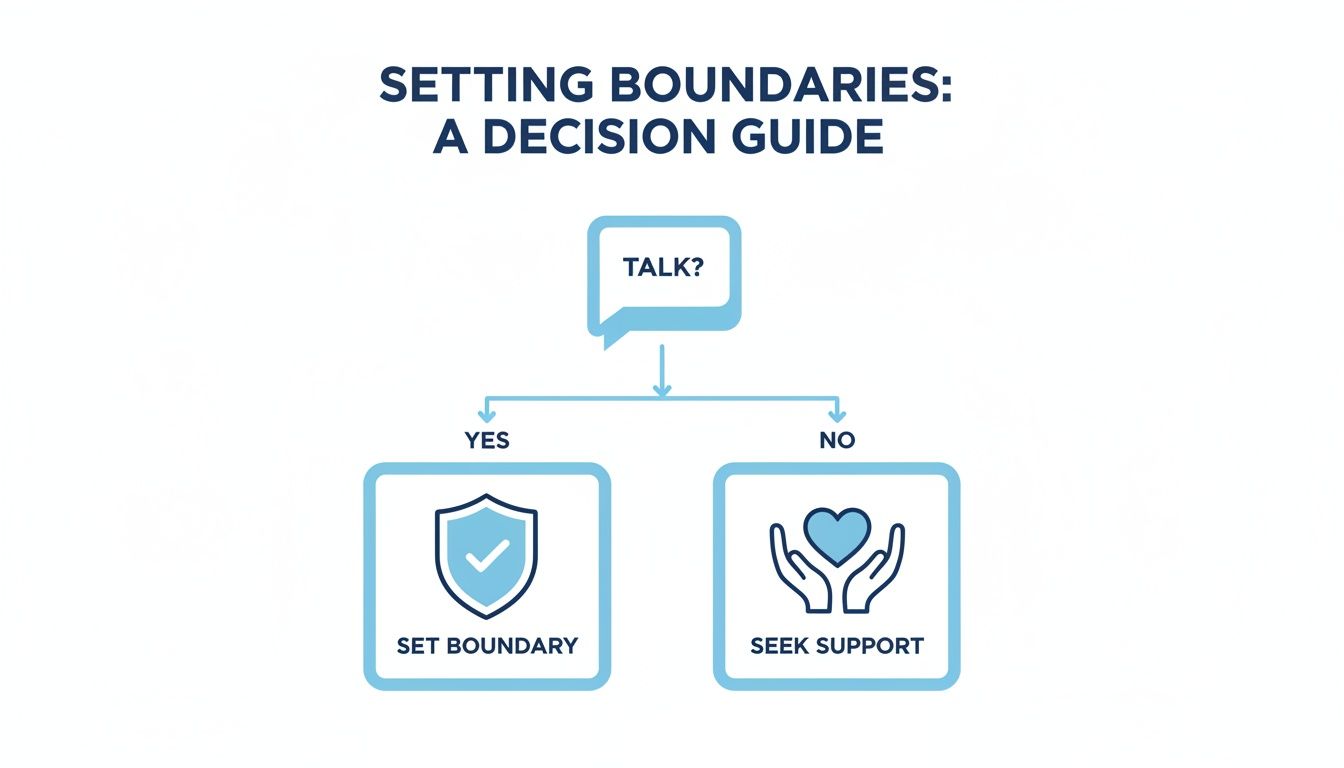
It’s a simple visual, but it captures a critical truth: when communication hits a wall, bringing in an outside expert is the key to moving forward.
Personalized Treatment Plans at Tru Dallas
There's no single script for addiction, so there can’t be a single script for recovery. Once detox is complete, we build a truly personal treatment plan that fits your loved one’s unique history, needs, and goals for the future. We offer different levels of care to give just the right amount of structure and support.
Our Levels of Care Include:
- Inpatient Rehab: This provides an immersive, structured environment completely removed from the triggers and stressors of daily life. It’s perfect for those who need intensive support to build a strong foundation in early recovery.
- Outpatient Rehab: For people who have a stable and supportive home life, our outpatient programs offer robust therapy and guidance while letting them keep up with work or family commitments.
For some partners, healing together is a core part of the recovery process. You can learn more about how we help rebuild partnerships by exploring our guide to couples rehab in Dallas County, Texas.
Expertise in Dual Diagnosis Treatment
More often than not, alcoholism is tangled up with an underlying mental health condition. It’s incredibly common for people to use alcohol to self-medicate for issues like anxiety, depression, or past trauma. We call this a dual diagnosis.
Trying to treat the addiction while ignoring the co-occurring mental health disorder is like patching a leaky roof but leaving the water damage to fester. The root problem is still there, making a relapse almost a certainty. At Tru Dallas, we specialize in dual diagnosis treatment. Our integrated approach addresses both the substance use and the mental health condition at the same time, giving our clients the tools for real, sustainable wellness.
If your relationship is suffering, please know you don’t have to figure this out alone. The expert team at Tru Dallas is ready to help your family start the healing process. Call us today to verify your insurance and find out more about our leading Dallas detox center.
Rebuilding Trust and Your Relationship After Treatment

Finishing an addiction treatment program is a huge accomplishment, but it’s not the end of the story. It’s the beginning of a brand new one. For both the person in recovery and their partner, this is where the real work of building a new life together starts. After the hurt and broken promises that come when alcoholism and relationships collide, moving forward means carefully and intentionally rebuilding the trust that was lost.
This new chapter demands patience, commitment, and a completely different set of tools. The old ways of communicating and interacting simply won't fit into this new, sober reality. It’s a lot like learning to care for a young tree; it needs consistent attention, the right conditions, and plenty of time to grow strong roots.
Rebuilding trust isn't a single event; it's a process built on consistent, honest actions over time. It means showing up, being accountable, and creating a new history together, one sober day at a time.
The Foundation of Continued Healing
Early sobriety is a fragile time, full of both hope and real challenges. To get through this period successfully, ongoing professional support is absolutely essential. This isn't just about preventing a relapse; it's about healing the deep emotional wounds that addiction left on the partnership.
At Tru Dallas, we don’t see aftercare as an optional add-on. We see it as a critical piece of creating lasting success. For couples, both individual and joint therapy are central to this next phase.
- Individual Therapy: This provides a private, confidential space for the person in recovery to keep working on their personal triggers. It also gives their partner a place to heal from their own trauma and work through any codependent behaviors they may have developed.
- Couples Therapy: This is where you learn to talk to each other again. It offers a structured, safe setting to share feelings, set up healthier dynamics, and work through old resentments with a professional guiding the conversation.
Taking this dual approach makes sure that both people are getting the support they need as individuals while also learning how to come back together as a stronger, healthier team.
Creating New Routines and Sober Connections in Dallas
Life after treatment is all about consciously building a new lifestyle—one that doesn't revolve around alcohol. This is an incredible opportunity for couples to rediscover one another and start making new, positive memories that strengthen their shared sober future.
One of the most powerful ways to do this is by finding new activities you genuinely enjoy together. It could be as simple as exploring the hiking trails around White Rock Lake, signing up for a weekend cooking class in the Design District, or just making a habit of evening walks through your Dallas neighborhood. The goal is to fill the time once occupied by drinking with authentic connection and joy.
Actionable Steps for Building a New Life Together:
- Schedule Sober Fun: Make a point to plan one or two activities each week that have nothing to do with alcohol. This helps create a new, positive rhythm for your relationship.
- Connect with Sober Support Groups: Attending meetings like Alcoholics Anonymous (AA) for the person in recovery and Al-Anon for their partner provides a vital support network. There are countless welcoming groups all across the Dallas-Fort Worth area.
- Establish Clear Communication: Agree to have regular, calm check-ins. This isn't about interrogating each other; it's about creating a safe space to share feelings, fears, and wins without judgment.
Here at Tru Dallas, our commitment to you goes far beyond the walls of our Euless facility. Our comprehensive aftercare planning includes detailed relapse prevention strategies and direct connections to the best local support resources. We help you build a clear roadmap for the long haul, making sure you have the support you need to navigate the road ahead.
If you’re ready to heal not just the addiction but the relationship it damaged, our team is here to guide you. Call Tru Dallas today to learn how our aftercare and family support services can help you and your partner build a new foundation of health, honesty, and trust.
Common Questions About Alcoholism and Relationships
When you’re watching alcohol tear a relationship apart, the questions can feel endless and overwhelming. For so many families here in the Dallas-Fort Worth area, trying to find clear answers in the middle of the chaos is exhausting. We hear these same painful questions every day, so we wanted to answer some of the most common ones with the straightforward, compassionate guidance you deserve.
Can a Relationship Truly Survive Alcoholism?
Yes, a relationship can absolutely heal and even grow stronger after addiction. But it’s not a passive process—it takes a deep, genuine commitment from both people.
The person struggling with AUD needs to fully engage in professional addiction treatment. At the same time, their partner needs to find their own support to heal from the trauma of it all. At Tru Dallas, our programs often bring in family and couples counseling to start rebuilding that lost trust and communication, helping you lay a new, sober foundation to build on.
Is Couples Counseling Enough to Fix the Problem?
While couples counseling is a fantastic tool for healing the relationship itself, it can't take the place of specialized addiction treatment. It’s simply not what it’s designed to do.
The person with AUD needs a dedicated program that can include things like medical detox, one-on-one therapy, and solid relapse prevention planning. Couples counseling works best when it happens alongside an evidence-based treatment plan. That’s exactly why we incorporate it into our care at Tru Dallas—to heal both the addiction and the damage it’s done to the partnership.
What Should I Do If My Partner Refuses Help?
This is one of the most heartbreaking and common situations we see. The hard truth is, you can't force your partner into a Dallas detox center. What you can do is take control of your own actions and protect your own mental and emotional health. This is where setting—and holding—firm boundaries becomes non-negotiable.
It's also vital to seek support for yourself through individual therapy or Al-Anon groups in the Dallas area. Often, when enabling behaviors stop, the person struggling is forced to confront the reality of their addiction.
For some, the impact of addiction becomes too much, and ending a marriage is the only path forward. If you're facing that difficult decision, it's important to know your legal rights. You can learn about the specifics of Filing for Divorce When Your Spouse is an Alcoholic to understand the process. Our admissions team at Tru Dallas is also here to provide guidance and resources for families stuck in this painful cycle.
The journey out of addiction is difficult, but you don't have to walk it alone. Tru Dallas Detox & Recovery Center provides the expert, compassionate care your loved one needs and the support your family deserves. Call us today for a confidential conversation to learn more about our programs and begin the path to healing. Find out how we can help.