
When someone you love in Dallas suddenly loses their grip on reality after using cannabis, it’s terrifying. One moment they’re fine, and the next they’re gripped by intense paranoia, seeing or hearing things that aren’t there, and believing things that make no sense. This isn’t just a "bad trip." It's a severe, acute reaction that can be triggered by cannabis—especially today's high-THC products—and it demands immediate, clear-headed action. At Tru Dallas Detox, we understand your fear and are here to help you navigate this crisis.
Understanding Cannabis-Induced Psychosis

Think of your brain as a finely-tuned radio, constantly processing signals from the world to create a clear picture of reality. Now, imagine that radio getting hit with a signal so powerful it blows the circuits. All you get is static, distorted noise, and random, frightening bursts of sound.
That’s a good way to picture what happens during cannabis-induced psychosis.
THC, the main psychoactive ingredient in cannabis, can sometimes act like that overpowering signal. It hijacks the brain’s delicate communication network—the endocannabinoid system—and throws the neurotransmitters that manage perception, thought, and emotion completely out of balance.
The result is a temporary but profound break with reality. The person's mind is essentially creating its own terrifying narrative, and to them, it feels 100% real. For families across the Dallas-Fort Worth area, watching this unfold is confusing, scary, and leaves you feeling completely helpless. Tru Dallas Detox offers the expert guidance you need.
This Is More Than Just a Bad High
It is absolutely critical to know the difference between the anxiety of a typical "bad high" and the reality-shattering nature of true psychosis. During a psychotic episode, the person has lost the ability to distinguish what’s real from what’s not. Making this distinction is the first step, because how you respond needs to be entirely different.
Here’s a clear breakdown to help you spot the difference. This table compares the common, uncomfortable side effects of being too high with the severe, crisis-level signs of a psychotic episode.
A Bad High vs. A Psychotic Episode
| Experience | Common Cannabis Side Effects | Potential Psychosis Symptoms |
|---|---|---|
| Paranoia | Feeling anxious or self-conscious, like people are judging you. | An unshakable, bizarre belief that you're in grave danger (e.g., being hunted by secret agents, poisoned by family). |
| Perception | Colors seem brighter, sounds are more intense, time feels slowed down or sped up. | Experiencing vivid hallucinations—seeing people who aren't there, hearing distinct voices, or feeling things on your skin. |
| Thoughts | Racing, disorganized, or silly thoughts that you can still recognize as your own. | Delusional thinking; your thoughts feel like they are being controlled by an outside force or broadcast to others. |
| Awareness | You're uncomfortable and want it to stop, but you know the feeling is from the cannabis. | You have completely lost touch with shared reality and believe the delusions and hallucinations are absolutely real. |
| Communication | You might be quiet and withdrawn or talk excessively and illogically. | Speech is completely jumbled, nonsensical, or you are catatonic and unresponsive. |
Knowing these signs helps you quickly grasp the severity of the situation. While a bad high is something you wait out, a psychotic episode is a sign of a brain in crisis.
Cannabis-induced psychosis is a serious medical event. It signals a severe disruption in brain chemistry that requires professional intervention, not a "just sleep it off" approach.
For the person going through it, the terror is genuine. The belief that they are being followed, that voices are commanding them, or that their life is at risk is not something they can be talked out of. This experience is a massive warning flare, signaling an underlying vulnerability to the powerful effects of modern cannabis.
Specialized Help Is Available in Dallas
You shouldn't—and can't—navigate this crisis alone. The fear, confusion, and potential for harm make cannabis-induced psychosis something that requires expert, compassionate care from a team that gets both substance use and mental health. This is exactly where a dual-diagnosis approach is essential.
At Tru Dallas Detox, we see this as a two-part problem that demands a single, integrated solution. Our first step is always to ensure safety and stabilize the crisis. From there, we work to address the root causes of the episode. We offer this specialized care right here in the DFW metroplex, serving communities from Dallas to Fort Worth and all the surrounding neighborhoods.
If you or someone you care about is lost in the static of a psychotic episode, please know you are not alone. Help is waiting. Call Tru Dallas Detox 24/7 to find a clear path toward recovery.
Recognizing the Symptoms of Cannabis Psychosis
Knowing what to look for is the first and most critical step toward getting help. Cannabis-induced psychosis can be a disorienting and frankly terrifying experience, both for the person going through it and for the loved ones watching it happen.
These symptoms are far more severe than just feeling anxious or "too high." They represent a fundamental break from reality. To make them easier to understand, we can group the symptoms of cannabis psychosis into three main categories.
These categories help organize the chaos of the experience, showing what psychosis adds to a person's reality, what it takes away, and how it disorganizes their thoughts and actions.
Positive Symptoms (What Psychosis Adds)
"Positive" in a clinical sense doesn't mean good. It means symptoms that are added to a person's experience—perceptions and beliefs that simply weren't there before. These are often the most alarming and recognizable cannabis induced psychosis symptoms.
Common positive symptoms include:
- Hallucinations: This is when a person sees, hears, feels, or smells things that don't exist. It's not a vague feeling; it's a vivid sensory experience that feels completely real to them. For example, they might hear distinct voices whispering their name or see figures in a room that no one else can see.
- Delusions: These are false beliefs that a person holds onto with absolute conviction, even when faced with clear evidence to the contrary. These beliefs are often bizarre and can be intensely frightening for the individual.
- Paranoia: While paranoia is a type of delusion, it’s so common in cannabis-induced psychosis that it deserves its own mention. This isn't just general mistrust; it’s a specific, unshakeable belief that someone is out to harm them. For a person in Dallas, this might mean believing that specific cars on the North Dallas Tollway are following them or that news anchors on local DFW channels are sending them coded, threatening messages.
These positive symptoms create an alternate reality that is terrifying and isolating. Arguing with or trying to "disprove" these experiences is often ineffective because, for the person going through it, the threat is 100% real.
Negative Symptoms (What Psychosis Takes Away)
In contrast to positive symptoms, negative symptoms are about what is lost or taken away from a person's typical behavior and emotional state. These signs can be more subtle but are just as significant.
Negative symptoms can be easily mistaken for laziness or depression, but they are a core part of the psychotic experience. They represent a hollowing out of a person's personality and drive.
Symptoms include:
- Avolition: A severe lack of motivation to start or complete tasks. This goes beyond procrastination; it's an inability to engage in purposeful activities, like going to work, school, or even maintaining personal hygiene.
- Alogia: A noticeable reduction in speech. The person may speak very little, give brief, empty replies to questions, or have long, unexplained pauses before speaking.
- Anhedonia: The inability to feel pleasure from activities that were once enjoyable. Hobbies, social events, and even spending time with loved ones may bring no joy.
- Flat Affect: A significant reduction in emotional expression. Their face may appear blank, their voice may be monotone, and they may not react to news that would normally evoke a strong emotional response. It's as if their emotional volume has been turned all the way down.
These symptoms rob a person of their ability to connect with others and engage with the world, leaving them feeling empty and detached.
Disorganized Symptoms (The Chaos and Confusion)
This final category covers symptoms related to jumbled thoughts and erratic behaviors. The brain's ability to organize information and execute logical actions becomes severely impaired.
- Disorganized Speech: Often called "word salad," this is when speech becomes jumbled, illogical, and difficult to follow. The person may jump between unrelated topics or use made-up words.
- Disorganized Behavior: Actions may become bizarre, unpredictable, and without purpose. This can include anything from pacing aimlessly to engaging in inappropriate social behavior.
- Catatonia: In some severe cases, a person may become catatonic—unresponsive to their environment, holding rigid poses for long periods, or displaying purposeless, repetitive movements.
If you are witnessing these symptoms in a loved one, it is a clear sign that professional help is needed immediately. This is not something that will just "wear off" like a typical high. It’s a medical crisis that requires an expert evaluation from a trusted Dallas provider.
At Tru Dallas Detox, our team specializes in dual diagnosis care, meaning we are equipped to handle both the substance use and the acute mental health crisis it has triggered. Don't wait for the situation to escalate. Call us anytime for a confidential consultation and learn how our addiction treatment in Dallas can help restore clarity and safety.
Who Is Most at Risk for Cannabis-Induced Psychosis?
You've probably wondered why one person can use cannabis and feel relaxed, while someone else has a completely terrifying experience that feels like a break from reality. The answer isn't random. It comes down to a specific combination of factors that make some people far more vulnerable than others.
Understanding these risks isn't about fear-mongering. For families here in Dallas, it’s about having the right information to make clear-headed decisions, especially with the high-potency cannabis products that are now so common. Think of it this way: some people are simply more sensitive to the powerful effects of modern cannabis, just like some are more sensitive to certain medications.
Recognizing the signs of vulnerability is the first and most important step in preventing a crisis before it ever starts.
The Key Risk Factors at Play
The chance of cannabis triggering psychosis isn’t about one single thing. It’s about how several key vulnerabilities can overlap and create a "perfect storm," pushing a susceptible brain past its limit.
The four biggest risk factors we see are:
- Age of First Use: Starting cannabis use during the teenage years or early twenties is one of the most significant risks. The brain is still wiring itself and developing until around age 25, which makes it incredibly sensitive to the disruptive effects of THC.
- Genetic Predisposition: If there’s a family history of mental illness—especially psychotic disorders like schizophrenia or bipolar disorder—it’s like having a genetic switch that’s already half-flipped. For some, cannabis can be the trigger that flips it the rest of the way.
- Frequency and Potency of Use: This one is huge. How often someone uses cannabis and the strength of what they're using are critical factors. Daily use, especially of high-THC products, sends the risk level soaring.
- Co-occurring Mental Health Conditions: People already navigating challenges like anxiety, depression, or PTSD can have brain chemistry that is more easily thrown off balance by THC. You can explore more about how addiction affects mental health in our detailed guide.
Understanding your unique risk profile is key. It's about knowing your family history, being honest about use patterns, and recognizing that age plays a huge role in how the brain responds to cannabis.
Potency and Frequency: The Two Factors You Can Control
Out of all the risks, the two you have the most direct control over are the strength of the cannabis and how often it's used. To get a handle on potency, think about alcohol. A light beer is about 5% alcohol, while something like grain alcohol can hit 95%. They are both "alcohol," but their impact is worlds apart.
The exact same thing is true for cannabis. Back in the 1990s, the average THC content in marijuana was around 4%. Today, here in Dallas and across the U.S., it's routine to see cannabis flower with over 25% THC. Even more concerning are the concentrates, or "dabs," which can top 90% THC.
Choosing these high-potency products is like picking grain alcohol over beer—the risk of a severe, negative outcome skyrockets.
This isn’t just a theory; the research is stark. A landmark 2019 study revealed that daily cannabis users were three times more likely to experience a psychotic episode. That risk jumped to five times for people who regularly used high-potency products. In cities like London, researchers estimated that as many as 30% of new psychosis cases could be directly linked to the use of high-potency cannabis.
If you or a loved one in the Dallas-Fort Worth area is using high-potency cannabis daily and also has a family history of mental illness, you are squarely in the highest risk category. This combination demands attention. Recognizing these signs is not a reason to panic, but it is absolutely a reason to act.
Is It Cannabis Psychosis or Schizophrenia?
For families in Dallas, the question that hangs in the air after a cannabis-induced psychotic episode is terrifying: is this temporary, or is this the beginning of a lifelong illness? The fear that this crisis could be the first chapter of a struggle with schizophrenia is very real, and it deserves an honest, clear answer.
The line between cannabis psychosis and schizophrenia isn't always clear-cut. For many, the psychosis is a frightening, one-time event that goes away once the drug leaves their system. But for others—especially those with specific vulnerabilities—it can be the trigger that unmasks a persistent psychotic disorder that was always there, lying dormant.
It's like an earthquake that reveals a hidden fault line. The quake didn’t create the fault, but it was the event that made it active and visible. In the same way, for someone with a genetic predisposition, a high-THC cannabis experience can be the seismic event that brings an underlying condition like schizophrenia to the surface.
When a Temporary Crisis Becomes a Long-Term Reality
This isn't just a theoretical risk; the data is sobering. A massive Finnish study following 18,000 people who had a substance-induced psychosis found that nearly 50% were later diagnosed with schizophrenia. Reinforcing this, Yale's Specialized Treatment Early in Psychosis (STEP) program found that over 75% of their early schizophrenia patients had a history of cannabis use. As cannabis use increases in areas like Dallas-Fort Worth, some studies show that up to 50% of hospitalized cases for cannabis psychosis eventually convert to a schizophrenia diagnosis. You can read more about these critical findings in this in-depth article from Yale Medicine.
This data isn't meant to scare you. It's meant to create a fact-based sense of urgency. The time immediately following a psychotic episode is a critical window. The right actions can dramatically improve long-term outcomes, potentially steering someone away from a chronic illness. This is why a "wait and see" approach is so dangerous.
The Power of Early and Specialized Intervention
When you're facing this potential link between cannabis psychosis and a lifelong mental illness, the most powerful tool you have is immediate, specialized intervention. Trying to manage this at home is simply not a safe or realistic option.
A true dual diagnosis program is essential. This is where both the substance use and the co-occurring mental health symptoms are treated at the same time, under one roof. To get a better feel for this integrated model, you can read our guide on the connection between mental illness and substance abuse.
The period after a psychotic episode is a critical crossroads. The path you choose—seeking immediate, professional help versus waiting—can make all the difference in the world for long-term mental health.
At Tru Dallas Detox, our expert psychiatric team understands this bridge intimately. We provide the medical oversight needed to manage acute psychosis, stabilize mental health, and conduct a thorough assessment to figure out what's really going on. Our Dallas detox center is a safe, controlled environment where we can untangle the symptoms of substance use from a possible underlying psychotic disorder.
If your loved one has experienced any cannabis induced psychosis symptoms, acting now is the single most important thing you can do. Contact Tru Dallas Detox today. Our compassionate admissions team is available 24/7 to help you navigate this difficult time and take the first step toward a clear diagnosis and a path forward.
How to Respond During a Psychotic Episode
Watching a loved one experience a psychotic episode is one of the most frightening things a family can go through. When their reality shatters, the situation can feel chaotic and overwhelming. In those moments, your calm, clear-headed actions are the most powerful tool you have.
Your absolute first priority is safety—for them, for you, and for everyone else. This guide provides a practical, step-by-step framework for families in the Dallas area on how to respond.
Step 1: Create a Safe, Calm Space
The very first thing you need to do is de-escalate. Someone experiencing psychosis is already overwhelmed by internal chaos; adding a loud, busy environment is like pouring gasoline on a fire.
- Move to a Quiet Room: Gently guide the person away from noise and activity. A calm, private space is best.
- Lower the Stimulation: Dim the lights. Turn off the TV, music, or anything else making noise.
- Remove Potential Hazards: This is critical. Quickly and discreetly take away anything that could be used for harm—sharp objects, weapons, even heavy items.
- Speak Calmly and Simply: Use a low, soothing tone. Keep your sentences short. Don't argue with them or try to rationalize their delusions. That will only make it worse.
Your goal is to create a secure bubble where the immediate threat of harm is minimized. This is the foundation you need to build before taking the next steps.
Step 2: Know When to Call for Emergency Help
Hesitation can be dangerous. It's incredibly important to recognize when the situation has moved beyond what you can safely handle at home. If you're in Dallas or the surrounding areas, do not wait to call 911 or get to the nearest hospital emergency room if you see any of the following:
- Immediate Danger: The person is threatening to harm themselves or anyone else.
- Aggressive or Violent Behavior: Their actions are becoming physically aggressive, destructive, or dangerously erratic.
- Medical Distress: They are showing signs of a medical emergency, like having a seizure or struggling to breathe.
- Extreme Disorientation: They are totally unresponsive or are a danger to themselves simply because they have no awareness of their surroundings.
When you call 911 in the Dallas area, make sure you clearly state, "I am reporting a mental health emergency." Explain that the person is experiencing psychosis. This specific language helps ensure the dispatch sends officers with the right training, like those from a Crisis Intervention Team (CIT), to handle the situation with appropriate care.
Step 3: Get a Professional Assessment Immediately
Once the immediate danger has passed and everyone is safe, the next step is getting a professional assessment. This is not the time for a "wait and see" approach. A psychotic episode is a major medical event, and it’s a clear signal that you need professional intervention to figure out what caused it and how to prevent it from happening again.
This visual helps explain why that assessment is so crucial. It shows how a cannabis-induced episode can branch into very different outcomes, depending on a person’s underlying vulnerability.
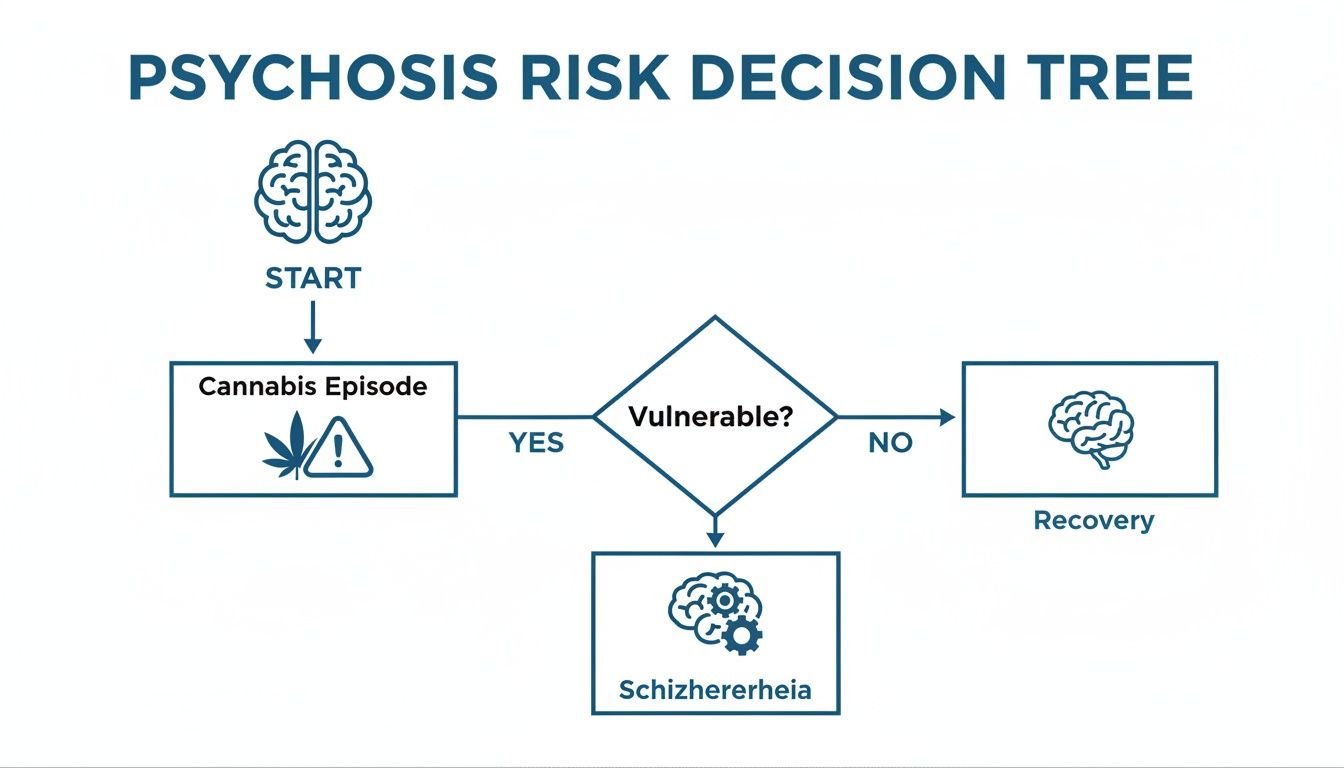
As you can see, professional evaluation is the only way to determine the level of risk and get on the right path toward recovery.
Navigating the aftermath is confusing and scary. You don't have to do it alone. Tru Dallas Detox is a leading resource for comprehensive assessment and addiction treatment in Dallas. Our experts can help determine if the cannabis induced psychosis symptoms are a temporary crisis or a sign of a deeper, underlying issue that needs to be addressed.
Call our 24/7 helpline now for expert guidance on what to do next. We can help you navigate this difficult time and start the journey toward stabilization and recovery.
Dual Diagnosis Treatment for Lasting Recovery in Dallas
Once the immediate crisis of a cannabis-induced psychotic episode has passed and things feel stable again, the real work begins. Getting back to "normal" is about much more than just waiting for the THC to clear your system. It's about addressing both the substance use and the mental health vulnerabilities the episode exposed. This is where dual diagnosis treatment comes in, and frankly, it's the only approach that leads to real, sustainable recovery.
Here at Tru Dallas Detox, we’ve seen it time and again: cannabis-induced psychosis is almost never just a substance problem. It’s a complex knot where addiction and mental health are tangled together. Trying to treat just one side of the issue is like trying to patch only half of a flat tire—you’re not going to get very far. Our entire program is built on this integrated philosophy, providing expert, compassionate care for individuals and families across the Dallas-Fort Worth area.
The Stages of Comprehensive Care in Dallas
Our process is structured and supportive, designed to help you rebuild a sense of stability from the ground up. Located in a private, comfortable facility in Euless, we provide a safe haven for healing, backed by constant clinical supervision to ensure your safety and well-being every step of the way.
Your journey to recovery at Tru Dallas Detox will move through several critical stages:
- Medically Supervised Detox: The first order of business is to safely clear all substances from your system. Our detox program offers 24/7 medical monitoring to manage withdrawal symptoms, ensuring you have a stable foundation for the therapeutic work ahead.
- Thorough Psychiatric Assessment: Once your body is clear of THC, our expert psychiatric team performs a comprehensive evaluation. This step is absolutely crucial for telling the difference between temporary, substance-induced symptoms and a potential underlying disorder that needs attention.
- Integrated Therapy: We then dive into evidence-based therapies that address addiction and mental health at the same time. This is the heart of effective dual diagnosis treatment in Dallas.
The therapies we use aren't random; they are specifically chosen to give you the practical, skill-based tools you need to heal. We focus on empowering you to manage your thoughts, regulate your emotions, and build a life free from substance dependence.
Evidence-Based Therapies for Healing Mind and Body
An effective recovery plan is built on therapies that are proven to work. At Tru Dallas Detox, we don't rely on guesswork. We use methods backed by clinical research to help you make profound and lasting changes in your life.
Our program incorporates powerful therapeutic modalities like:
- Cognitive Behavioral Therapy (CBT): This is a powerhouse therapy for identifying and challenging the distorted thought patterns that fuel both addiction and psychotic symptoms. You’ll learn to reframe paranoid thoughts, manage delusions, and develop healthier ways to cope with stress.
- Dialectical Behavior Therapy (DBT): DBT is exceptionally good at helping you manage intense emotions and distress without feeling overwhelmed. It teaches vital skills in mindfulness, emotional regulation, and interpersonal effectiveness so you can navigate triggers without turning back to substances.
- Individual and Group Counseling: One-on-one sessions give you a safe, private space to work through personal history and trauma. At the same time, group sessions build a powerful community of peers who truly get what you’re going through, fighting the isolation that so often accompanies these conditions.
- Holistic Wellness: True, lasting recovery means healing the whole person. We incorporate practices that support your overall well-being, recognizing that spiritual and emotional health are vital. Our approach respects all paths, and we understand that for some, exploring the intersection of faith and addiction can be an important part of the journey, as discussed in resources like Addiction and Christians.
Choosing a dual diagnosis program isn't just an option; it's a necessity. Treating cannabis induced psychosis symptoms without addressing the co-occurring substance use disorder creates a revolving door of relapse and instability. Integrated care is the key to breaking that cycle for good.
If you are looking for dual diagnosis treatment centers in Texas, our team is here to help. Call Tru Dallas Detox today to verify your insurance and speak with a compassionate admissions specialist. We are available 24/7 to help you take that first, most important step toward a lasting recovery.
Your Questions About Cannabis Psychosis, Answered
When you’re dealing with the fallout of a cannabis-induced psychotic episode, you’re bound to have a ton of questions. It's a frightening and confusing time, and getting clear, straightforward answers is the first step toward finding solid ground. Let’s tackle some of the most common questions we hear from families here in the Dallas-Fort Worth area.
How Long Does Cannabis-Induced Psychosis Last?
The immediate, intense symptoms of a psychotic episode can last anywhere from a few hours to several days. But it’s crucial to understand that once the acute phase is over, the story isn't finished.
Without professional help to address the cannabis use that triggered it, cannabis-induced psychosis symptoms can, and often do, come back. For some, an episode like this is a major red flag—a serious warning sign that there might be a more persistent underlying condition that needs attention.
Getting a professional evaluation at a Dallas treatment center like Tru Dallas Detox is the only way to really know what’s going on and map out a plan for recovery.
Can You Get Psychosis from Using Cannabis Just Once?
Yes, you can. While it’s certainly more common with long-term, heavy use, a single, large dose of today’s high-potency cannabis can absolutely trigger a temporary psychotic break in someone who is vulnerable.
Think of it as a perfect storm of risk factors coming together—things like a person’s genetics, their current stress levels, and their personal or family mental health history. If this happens, even once, it’s a serious signal that can’t be ignored and requires a professional assessment right away.
For those grappling with co-occurring substance use and mental health challenges, finding accessible care is key. Exploring the benefits of choosing online addiction treatment for lasting recovery can be a pivotal step in building a sustainable path forward.
Is Treatment Covered by My Insurance in Texas?
Yes, in almost all cases. Treatment for substance-induced mental health emergencies, including psychosis, is considered a medical necessity. As a result, it’s covered by most PPO insurance plans.
The admissions team here at Tru Dallas Detox can verify your insurance benefits for you, either online or right over the phone. It’s a quick, confidential process.
We want to make sure you can access our top-tier dual diagnosis program here in the Dallas-Fort Worth area without added financial stress. Please don’t let worries about cost keep you from getting the help your family needs.
If you're watching a loved one go through these frightening symptoms, you don't have to navigate this alone. Clarity and safety are just a phone call away. At Tru Dallas Detox, our compassionate team is on standby 24/7 to walk you through the next steps and start the healing process. Visit us online or call today to start the journey toward recovery: https://dallasdetox.com.
