

If you’ve ever gone through alcohol withdrawal, you might know the feeling all too well: an intense, maddening itch that seems to come from deep beneath your skin. It’s not your imagination. That uncontrollable itching, known as pruritus, is a very real and common part of the process.
This isn’t just a minor rash. It’s a direct signal that your body and central nervous system are in a state of hyper-arousal as they struggle to adapt to the absence of alcohol. For individuals in Dallas seeking help, understanding this symptom is the first step toward getting safe, effective treatment at Tru Dallas Detox.
Why Alcohol Withdrawal Causes Itching
Think of your nervous system as a river that’s been held back by a dam. Alcohol acts as the dam, suppressing neural activity. When you suddenly stop drinking, that dam breaks, and your system is flooded with an uncontrolled surge of energy.
This sudden rebound is the engine behind many of the most challenging alcohol detox side effects, and that relentless itching is one of the first things many people notice. It’s caused by a perfect storm of factors all happening at once.
Dehydration and Nutrient Deficiencies
Chronic, heavy drinking is incredibly dehydrating. Alcohol is a diuretic, which means it forces your body to shed fluids. During withdrawal, this problem is often made worse by other symptoms like sweating, vomiting, or diarrhea.
All of that fluid loss leaves your skin dry, tight, and extremely vulnerable to irritation. At the same time, long-term alcohol use damages your gut’s ability to absorb the very nutrients your skin needs to stay healthy, including:
- Zinc: Absolutely vital for skin repair and a healthy immune response.
- B Vitamins: The building blocks for cell regeneration and skin integrity.
- Vitamin C: A key antioxidant that protects your skin from damage.
Without these essential nutrients, your skin simply doesn't have the tools to defend or repair itself, making it a prime target for itching and inflammation.
Histamine Release and Liver Strain
Your liver is the organ responsible for filtering toxins, and alcohol puts it under tremendous stress. When the liver is overwhelmed by chronic heavy use, it can’t filter your blood effectively. This allows substances like bile salts to build up, travel to your skin, and trigger a deep, persistent itch.
On top of that, withdrawal itself causes your body to dump a massive amount of histamine into your system. This is the same chemical that drives allergic reactions—it’s what causes the swelling, redness, and intense itching from a bug bite. This histamine surge, combined with an overstimulated nervous system, is a major reason the itch feels so widespread and impossible to ignore.
To give you an idea of what can trigger this, here is a quick guide summarizing the main causes.
Quick Guide To Causes Of Alcohol Withdrawal Itching
This table breaks down the key physiological reasons your body experiences itching during alcohol detox, helping you see how these different factors work together.
| Cause | What Happens in Your Body | Resulting Symptom |
|---|---|---|
| Nervous System Rebound | The brain, no longer suppressed by alcohol, becomes hyperactive. | Heightened sensitivity and a general feeling of being "crawly" or itchy. |
| Dehydration | Alcohol's diuretic effect, plus withdrawal symptoms, leads to severe fluid loss. | Dry, tight, and cracked skin that is easily irritated and prone to itching. |
| Histamine Release | The body releases a flood of histamines, similar to an allergic reaction. | Widespread, intense itching, redness, and sometimes hives or a rash. |
| Liver Strain | The overworked liver can't filter toxins like bile salts from the blood. | A buildup of these substances in the skin, causing a deep and persistent itch. |
Seeing these causes laid out makes it clear that the itching isn't just a surface-level problem—it’s a sign of deep internal distress that requires careful management.
For someone who has been drinking heavily for years—perhaps 4 to 5 pints of wine daily—suddenly stopping can cause the skin to erupt in an unbearable itch. This typically occurs between 48 and 96 hours after the last drink and is a serious sign of alcohol withdrawal that demands professional medical care. Discover more insights on why this happens in a study published by the National Center for Biotechnology Information.
Trying to navigate this on your own is not just overwhelming; it can be incredibly dangerous. At Tru Dallas Detox, we provide the medical oversight and compassionate support needed to manage these symptoms safely. Our team understands the physiology behind alcohol withdrawal and itching, and we’re here to help you get relief and start your recovery in a secure, comfortable environment.
The Withdrawal Timeline: When to Expect Itching and Other Symptoms
Knowing what to expect during alcohol withdrawal can take a lot of the fear and guesswork out of the process. While everyone’s experience is unique, there’s a general pattern that symptoms tend to follow, often starting mild before ramping up and then finally fading. The timeline isn’t just a calendar of events; it’s the single biggest reason why trying to detox alone at home is so incredibly risky.
Things can change in a hurry. What feels manageable one hour can become a full-blown medical emergency the next. This is why having round-the-clock medical care at a professional Dallas detox center like Tru Dallas Detox is so critical. Our team is there to safely guide you through every stage.
The infographic below breaks down the typical progression of alcohol withdrawal, showing when itching and other key symptoms are most likely to appear.
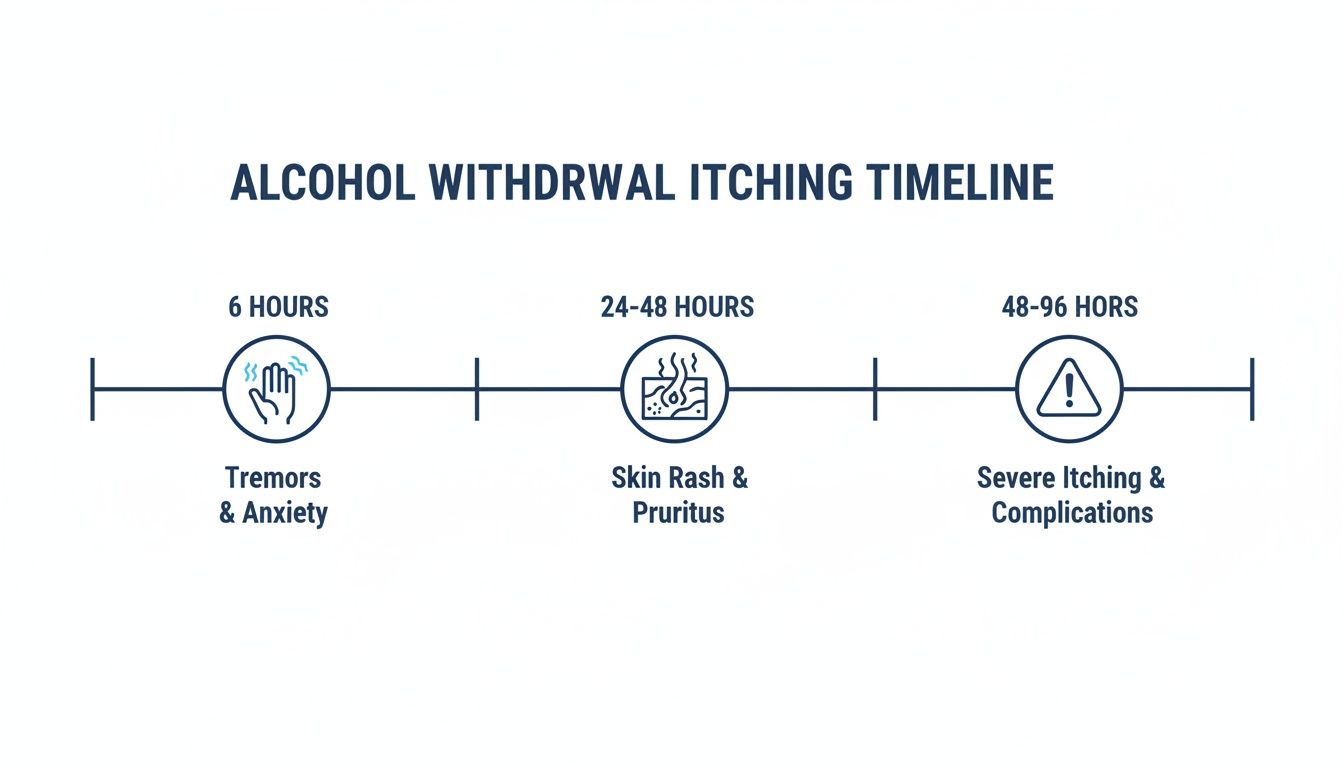
As you can see, the early tremors are just the beginning. The more concerning symptoms, including skin issues and serious health risks, really intensify as you move toward the 48- to 96-hour mark.
The First 6 to 12 Hours
The first clues that withdrawal is starting usually show up within 6 to 12 hours of your last drink. This is when your central nervous system, no longer suppressed by alcohol, begins to rebound and fire on all cylinders.
In this initial phase, you’ll likely feel:
- Anxious and irritable: A persistent feeling of being on edge or restless is very common.
- Tremors: Shaky hands, often called "the shakes," are a classic early warning sign.
- Headaches and nausea: Your body is starting to protest the absence of alcohol.
- Insomnia: You may find it impossible to fall asleep or stay asleep.
At this point, itching usually isn't on the radar. The body is more focused on the immediate nervous system and digestive upset.
The Peak at 24 to 72 Hours
This is the window when withdrawal symptoms typically hit their stride and become most intense. The early signs worsen, and new, more distressing ones join the mix. It's during this critical period that alcohol withdrawal and itching often becomes a major issue.
Most people who drink heavily will feel withdrawal symptoms start within 6 to 24 hours, but they tend to peak somewhere between 24 and 72 hours and can hang on for a week or more. That intense, maddening itch often shows up after the 48-hour mark and can persist for days as your body’s systems fight to find their balance again. You can explore more detailed timelines of alcohol withdrawal skin issues from Golden Road Recovery.
The Kindling Effect: If you’ve gone through withdrawal before, each time can be worse than the last. This is known as the kindling effect. Think of it as your brain "learning" the withdrawal pattern and overreacting more dramatically with each attempt to quit, leading to a faster and more dangerous onset of symptoms.
This is exactly why someone with a history of detoxing might experience severe symptoms, like intense itching or even seizures, much faster than a first-timer. Their brain has become hypersensitive to the process.
Navigating the Timeline Safely in Dallas
Given how unpredictable and intense this timeline can be, professional medical supervision isn't just a good idea—it's non-negotiable. At Tru Dallas Detox, our clinical team is on hand 24/7 to watch your symptoms as they develop. We don’t just wait for things to get bad; we get ahead of them, managing your discomfort and keeping you safe from the very first hour.
If you’re in Dallas, Fort Worth, or a nearby community, you don’t have to face this alone. Our team is ready to offer immediate help, manage your symptoms through the peak, and guide you with expert medical care. Call us today at 469-878-5993 to speak with an admissions specialist and take the first, safest step toward recovery.
Distinguishing Withdrawal Itch From Other Skin Conditions
When you're dealing with an itch that feels deep, maddening, and just won't quit, your first thought is probably to figure out what’s causing it. Is this just a frustrating skin issue, or is it a sign of alcohol withdrawal and itching? Getting the right answer is more than just a matter of curiosity—it’s what points you toward the right care. While it’s tempting to play detective, self-diagnosing is never the answer. The only way to know for sure is with a professional evaluation at a trusted Dallas treatment center.
Here’s the key thing to remember: the itch from alcohol withdrawal rarely shows up alone. It’s almost always part of a bigger picture, a collection of clues that point to a central nervous system in full-blown distress. If that maddening itch is happening alongside tremors, sweating, anxiety, or nausea, there's a very good chance it's tied directly to withdrawal.
Comparing Common Causes
Let's break down how to tell the difference between the unique cluster of symptoms from alcohol withdrawal and other common skin problems. Seeing these patterns side-by-side can really highlight why it's so critical to get professional help for addiction.
Alcohol Withdrawal Itch:
- Accompanied by other withdrawal symptoms: The itch doesn't just stand alone. It’s the plus-one to a party that includes anxiety, shaky hands, sweating, insomnia, or nausea.
- Widespread and deep: The feeling is often described as coming from under the skin, not just on the surface. It can pop up all over the body, not just in one spot.
- Follows a specific timeline: It usually gets worse 24 to 72 hours after the last drink, which lines up perfectly with the peak of acute withdrawal.
Allergic Reactions:
- Often involves hives or a localized rash: You’ll typically see the evidence on your skin—red welts, a blotchy rash, or irritation where you came into contact with an allergen.
- Lacks systemic withdrawal symptoms: An allergy might make you miserable, but it won’t cause tremors, severe anxiety, or the other signature signs of alcohol withdrawal.
- Responds to antihistamines: A dose of over-the-counter allergy medicine usually brings pretty quick and significant relief.
Underlying Liver Disease:
- Paired with other liver-related signs: The itching almost always comes with other red flags like jaundice (a yellowing of the skin and eyes), dark-colored urine, a swollen abdomen, or pale stools.
- Chronic and persistent: This isn't an itch that comes and goes over a few days. It's often a long-lasting, stubborn symptom that sticks around.
- Caused by bile salt buildup: It's a direct result of the liver being too damaged to filter toxins from the blood. This is a serious medical issue that needs a doctor's immediate attention.
If you are experiencing intense itching alongside confusion, tremors, and severe anxiety, you are not just dealing with a simple skin problem. This combination is a strong indicator of Alcohol Withdrawal Syndrome (AWS), a serious condition that requires immediate medical supervision.
Trying to guess what’s causing your symptoms isn't just difficult; it's dangerous, especially when the stakes are this high. The symptoms of severe alcohol withdrawal can spiral out of control fast, often without any warning.
The safest, most reliable way forward is to get a professional assessment. At Tru Dallas Detox, our clinical team has the expertise to accurately diagnose what’s behind your symptoms, including the alcohol withdrawal and itching, and build a personalized plan to manage them safely. If you’re in Dallas, Fort Worth, or anywhere in North Texas, don't just wait and wonder. Call us at 469-878-5993 for a confidential chat and get the clarity and care you deserve.
When Itching Signals A Medical Emergency
While most cases of itching during withdrawal are your body’s way of sounding an internal alarm, sometimes that alarm is a full-blown, five-alarm fire. You have to know how to spot the difference. If that intense, maddening itch is happening alongside a handful of other very specific, frightening symptoms, it’s a red flag that the central nervous system is in a complete crisis. This is when you must get medical help immediately.

Trying to ride this out at home isn't just a bad idea; it can be fatal. This is the point where the 24/7 medical supervision and rapid response you find at our Dallas detox facility become absolutely non-negotiable for your safety.
Recognizing The Signs Of Delirium Tremens
The most dangerous and severe form of alcohol withdrawal is a condition called Delirium Tremens (DTs). It is a full-blown medical emergency that demands immediate hospitalization. The kind of itching that comes with DTs is often paired with a terrifying collection of symptoms that signal your body’s core functions are breaking down.
You must call 911 or get to an emergency room without delay if severe itching occurs with any of these signs:
- Profound Confusion or Disorientation: Not knowing where you are, who you are with, or what time it is.
- Severe Agitation and Aggression: Extreme restlessness, hostility, or completely unpredictable behavior.
- High Fever and Heavy Sweating: A body temperature that spikes to dangerous levels.
- Seizures: Uncontrollable convulsions that can be life-threatening.
- Hallucinations: Seeing, hearing, or feeling things that simply aren't there.
One of the most disturbing hallucinations tied to DTs is a tactile one known as formication—the unshakable sensation of bugs crawling on or under your skin. This can drive a person to scratch themselves raw, causing deep wounds and serious infections, all while their brain is telling them the feeling is real.
Delirium tremens is the absolute peak of danger in alcohol withdrawal, and it often magnifies lesser-known symptoms like severe skin itching. It typically strikes people with a history of long-term, heavy drinking, sometimes for 10 years or more. While about 50% of people with an alcohol use disorder will experience withdrawal, only a small fraction—around 4%—will ever progress to full-blown DTs. But don't let that small number fool you; DTs can be fatal if not managed in a hospital. You can discover more insights about this severe condition in the National Library of Medicine's overview of alcohol withdrawal syndrome.
Why Medical Supervision Is Not Optional
When symptoms get to this level, you are way past the point of being "uncomfortable." Your brain and body are in a state of chaos. The risk of cardiac arrest, respiratory failure, or a life-altering injury from a seizure is incredibly high. For a much deeper dive into these risks, you can read our guide on the dangers of quitting alcohol cold turkey.
This is not a test of willpower. Severe alcohol withdrawal is a medical crisis that requires immediate, advanced clinical care to stabilize the body and prevent catastrophic outcomes.
At a professional addiction treatment center in Dallas like Tru Dallas Detox, our medical team is trained to spot the very first signs of severe withdrawal. We can step in with fast-acting medications to prevent seizures, manage agitation, and safely guide your body back to a stable state.
There is no safe way to manage DTs at home. The supportive, around-the-clock care we provide isn’t just about comfort—it’s a critical, life-saving measure. If you or someone you love are in the Dallas-Fort Worth area and worried about withdrawal, please don't wait for an emergency to unfold. Contact our admissions team at 469-878-5993 now for a confidential assessment and immediate help.
How Medically Supervised Detox Provides Lasting Relief
Trying to manage alcohol withdrawal on your own is a lot like trying to navigate a hurricane without a life raft. While some at-home remedies might seem like a good idea, they can only offer a tiny bit of relief for what is a deep, systemic crisis. The truth is, lasting relief from alcohol withdrawal and itching isn't found in a cold compress or a bottle of lotion; it's found in expert medical care that gets to the root of the problem. This is where the real work of healing begins.
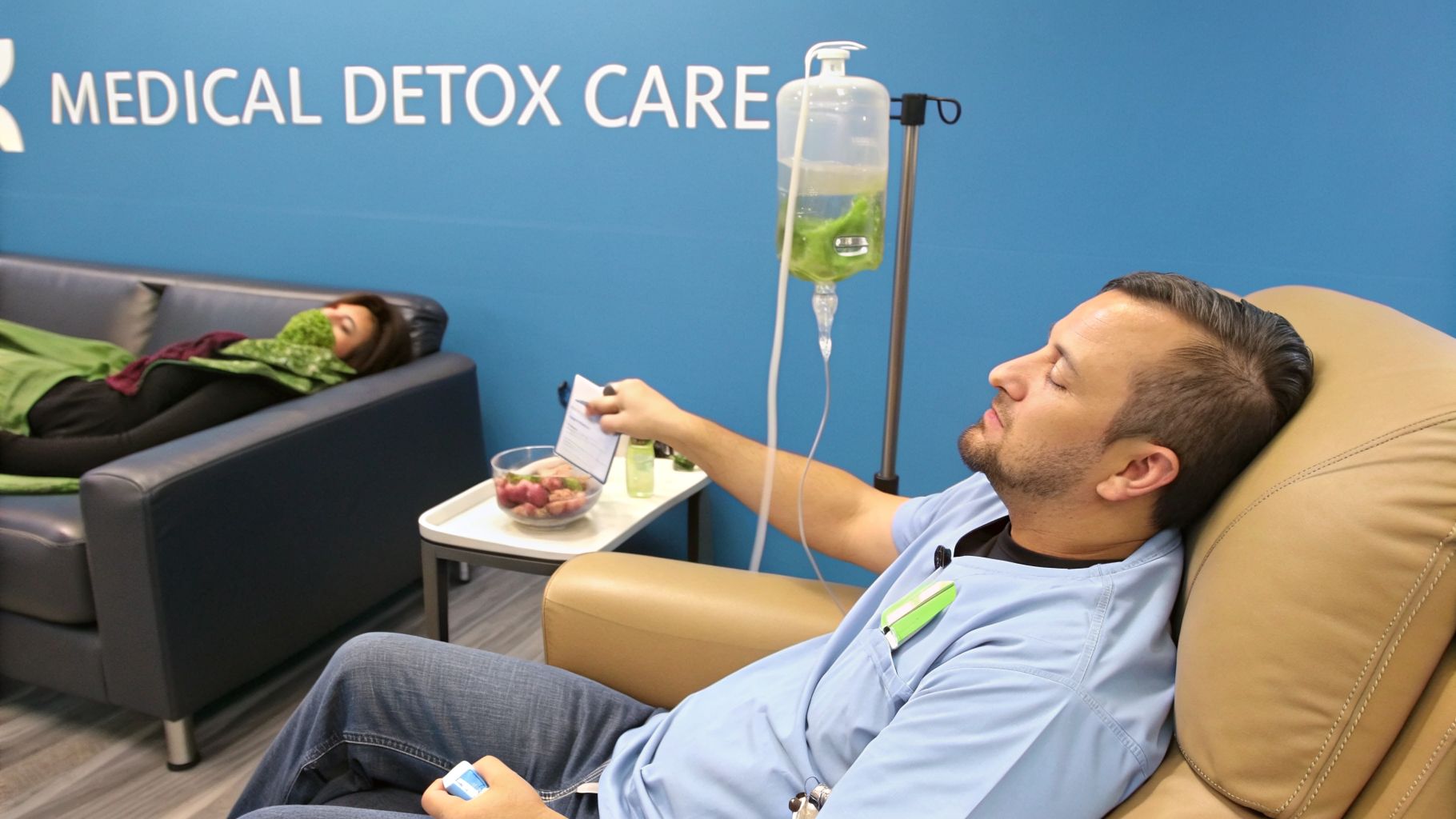
At a professional detox center in Dallas, we look at withdrawal itching as more than just a surface-level annoyance. It's a critical signal from your body. Our approach is a medical process designed to stabilize your system and calm the overactive nervous system that’s causing the itch in the first place. The goal isn't just to make you more comfortable—it's to keep you safe and build a solid foundation for a real, sustainable recovery.
Addressing The Root Causes Of Withdrawal Itching
When your body is in the grips of withdrawal, it needs more than just temporary symptom relief—it needs intensive, targeted medical support. At Tru Dallas Detox, our clinical team uses proven, evidence-based methods to get to the source of the problem.
Our care protocol always includes:
- Medication-Assisted Treatment (MAT): We often use specific medications, like benzodiazepines, to calm the central nervous system’s hyperactivity. This provides immediate and powerful relief from the internal storm that causes both intense anxiety and that relentless, full-body itch.
- IV Hydration and Nutritional Therapy: Severe dehydration is a huge contributor to dry, intensely itchy skin during withdrawal. We use IV hydration to quickly restore your body’s fluid balance while also delivering essential vitamins and minerals—like zinc and B-vitamins—that your body has been starved of. This helps your skin start healing from the inside out.
- 24/7 Clinical Monitoring: Withdrawal symptoms can change dramatically in a matter of minutes. Our medical staff is on hand around the clock, constantly monitoring your vital signs and comfort level. This allows us to adjust your care plan in real-time, preventing complications and ensuring your safety.
Each patient's journey is guided by a well-structured treatment plan that details every step of their care. This ensures that the support provided is both targeted and highly effective.
Creating A Foundation For Sustainable Recovery
A professional detox environment does far more than just manage your symptoms; it gives you the secure space you need to actually heal. Trying to detox at home forces you to face the peak of withdrawal in a place filled with triggers and completely without medical support. The constant itching, crushing anxiety, and physical misery can make relapse feel like the only way out.
In a professional detox setting, every element is designed to support your recovery. You are removed from the stresses of daily life and placed in a comfortable, secure environment where your only job is to get well.
By providing a safe and controlled setting, we help you break the vicious cycle of withdrawal and relapse. You can rest knowing that you are protected from the most dangerous withdrawal complications, which allows you to focus all your energy on healing. This is an absolutely critical step in building the confidence and stability you'll need for the next phase of your recovery journey. For more details on what this involves, you can read our guide on the medically supervised alcohol detox process.
Home Detox Vs Professional Detox At Tru Dallas
When you're dealing with severe withdrawal symptoms like intense itching, the choice between detoxing at home and seeking professional help is a critical one. The table below lays out the stark differences in safety, comfort, and long-term effectiveness.
| Factor | Attempting Detox At Home | Professional Detox at Tru Dallas |
|---|---|---|
| Safety & Medical Risk | Extremely high risk. No medical supervision to manage life-threatening complications like seizures, hallucinations, or DTs. | Highest level of safety. 24/7 medical monitoring and immediate intervention for any complications, ensuring your well-being. |
| Symptom Management | Minimal and ineffective. Relies on OTC remedies that don't address the neurological root causes of itching, anxiety, and tremors. | Comprehensive and effective. Access to proven medications (MAT) and IV therapy to calm the nervous system and provide immediate relief from severe symptoms. |
| Comfort Level | Extremely low. Intense physical and psychological discomfort with no professional support to ease the process. High likelihood of relapse for relief. | Focused on comfort. A serene environment with care designed to make the process as comfortable as possible, allowing you to rest and heal. |
| Long-Term Success | Poor. High failure rate due to overwhelming symptoms and lack of a structured transition into ongoing recovery and treatment. | Strong foundation. A safe, successful detox builds confidence and prepares you for the next steps in a comprehensive recovery plan. |
Choosing professional care isn't just about managing the symptoms you have now; it's about investing in a future where you don't have to go through this again. It sets you up for success from day one.
For anyone in Dallas, Fort Worth, or the surrounding areas, making the choice to get professional help is the most important decision you can make for your health. It is the difference between simply trying to survive withdrawal and actually building a strong foundation for a life free from alcohol. Call Tru Dallas Detox at 469-878-5993 to speak with our compassionate admissions team and start your journey toward safe, lasting relief today.
Common Questions About Alcohol Withdrawal And Itching
When you're dealing with alcohol withdrawal, the questions can come fast and furious, especially when you’re hit with a symptom as miserable as intense, crawling-under-your-skin itching. For folks here in the Dallas-Fort Worth area, getting straight, honest answers is the first step toward getting help. We hear these questions every day at our Dallas facility, so let's clear up the confusion and show you why professional care is always the safest choice.
How Long Does The Itching From Alcohol Withdrawal Last?
The maddening itch that comes with alcohol withdrawal, known as pruritus, usually follows the same general timeline as other acute symptoms. It tends to ramp up and hit its peak between 24 and 72 hours after the last drink. This is when your nervous system is in a state of high alert and firing on all cylinders.
That awful sensation can stick around for a week or more, depending on how long and how much you’ve been drinking, plus your overall health. In a medically supervised setting like our Dallas detox center, we don’t just tell you to wait it out. We actively manage it with specific medications and supportive care to calm your nervous system. Our job is to make you as comfortable as humanly possible, which drastically cuts down on both how bad the itching gets and how long it lasts.
Are There Any Home Remedies For The Itching?
While things like cool compresses, lukewarm oatmeal baths, or trying to stay hydrated might offer a moment of minor relief, they don’t get to the root of the problem. You can’t put a band-aid on a house fire. Alcohol withdrawal is a serious medical event caused by a central nervous system in full-blown crisis, and the itching is just one sign of that bigger, more dangerous storm.
Trying to manage alcohol withdrawal and itching on your own isn't just a bad idea—it's incredibly risky. The symptoms can escalate into a medical emergency like seizures or delirium tremens without any warning. The only truly safe and effective "remedy" is getting professional medical care in a supervised detox.
Will My PPO Insurance Cover Detox In Dallas?
Yes, almost all PPO insurance plans cover medically supervised alcohol detox. It’s widely recognized as a medically necessary service, not an optional one. We know that dealing with insurance companies can feel like a full-time job, but that’s a burden you shouldn’t have to carry right now.
The admissions team here at Tru Dallas Detox works with every major PPO provider day in and day out. We can verify your benefits for you—quickly, confidentially, and at no cost. Let us handle the red tape so you can put 100% of your focus on getting well.
What Happens After The Withdrawal Symptoms Stop?
Making it through detox is a monumental achievement. It’s the essential first step to getting your life back. But it’s the beginning of the road, not the final destination. Real, lasting recovery is built on a foundation of ongoing support that addresses the psychological reasons behind the drinking in the first place. Calming the hyperexcited nervous system is key to managing post-detox issues like anxiety and insomnia. Supportive supplements, like combinations of magnesium and GABA for calm and sleep, can be a helpful part of a broader wellness plan.
Once you’re medically stable, our team works right alongside you to build a personalized aftercare plan. This is your roadmap forward. We’ll connect you with trusted resources in the Dallas area, like individual therapists, support groups, and continuing treatment programs that will empower you to build a strong, sober future.
Don’t let questions and uncertainty keep you from the life-saving care you or your loved one needs. The team at Tru Dallas Detox is here to give you the answers and support to move forward with confidence. Call us at 469-878-5993 or visit https://dallasdetox.com to start your recovery in a safe, professional, and compassionate environment.
