

When you or a loved one is struggling with addiction, figuring out where to turn can feel impossible. The good news is that in Texas, there are options available for everyone, regardless of their financial situation. State funded drug rehab in Texas is a critical lifeline, offering low-cost or even no-cost treatment to residents who need it most.
These programs are built on a simple, powerful idea: recovery shouldn't depend on what's in your bank account. They're supported by public funds to ensure that anyone ready to get help can find a path forward.
Key Takeaways
- State-funded drug rehab in Texas provides addiction treatment at little to no cost for eligible residents.
- The primary goal is to remove financial barriers to accessing life-saving care.
- The Texas Health and Human Services Commission (HHSC) oversees and distributes funding for these programs.
- Understanding how these programs work is the first step toward finding the right help for you or a loved one.
- Both state-funded and private rehab options are available, each with distinct advantages.
What State Funded Drug Rehab in Texas Really Means

Think of state-funded rehab as a community safety net. It’s a system designed to catch people who might otherwise have nowhere else to go for help. The main agency managing these services is the Texas Health and Human Services Commission (HHSC), which directs both state and federal money to organizations on the ground.
This guide will break down exactly how this system works, who qualifies, and what you need to do to get help. We want to show you that compassionate, effective care is within your reach. While state programs are a vital resource, they aren't the only option. Private centers exist alongside them, often offering different services and immediate availability.
The Role of Public Funding
Where does the money come from? It's a mix of federal grants, state tax dollars, and Medicaid payments. The HHSC doesn't run the treatment centers directly; instead, it sends these funds to a network of regional agencies called Local Mental Health Authorities (LMHAs) or Local Behavioral Health Authorities (LBHAs).
These local authorities are your front door to the system. They're the ones who assess your needs and connect you with the right treatment providers in your community. This local approach helps tailor care to what's needed in different parts of Texas, but because the funding isn't unlimited, it can sometimes mean there's a wait for services.
The entire point of state-funded rehab is to knock down the financial wall that stands between a person and their recovery. It ensures that things like income or insurance status don’t block access to life-saving care like detox, therapy, and support programs.
State Funded vs Private Rehab at a Glance
Getting a clear picture of your options is key. Public and private facilities both share the ultimate goal of long-term recovery, but they get there in different ways. The cost, environment, and how quickly you can get started can vary quite a bit. Private centers, for instance, often partner with PPO insurance plans to provide immediate entry and may offer a wider range of therapies or amenities.
Here's a quick side-by-side look at the major differences between the two paths in Texas.
| Feature | State-Funded Rehab | Private Rehab |
|---|---|---|
| Cost | Typically no-cost or low-cost based on income. | Paid through private insurance, financing, or self-pay. |
| Admissions | Often involves waitlists due to high demand. | Immediate or rapid admission is usually possible. |
| Amenities | Basic, comfortable, and focused on essential care. | Often includes more amenities like private rooms or fitness areas. |
| Funding | Relies on government grants and taxpayer dollars. | Funded by insurance payments and private client fees. |
Making an informed choice is about knowing what works best for your specific situation.
Key Takeaways
- State-funded rehab in Texas offers addiction treatment at little to no cost for those who qualify.
- The Texas Health and Human Services Commission (HHSC) is the state agency that oversees the funding.
- Your Local Mental Health Authority (LMHA) is your first point of contact to access these services.
- These programs are designed for accessibility, but high demand can create waitlists.
- Private rehab is an alternative that often provides immediate admission and different amenities, frequently covered by PPO insurance plans.
So, How Do I Know If I Qualify for a State-Funded Program?
Getting a handle on the entry requirements is your first real step toward getting help. Figuring out the criteria for a state funded drug rehab in Texas can feel like a maze, but it’s important to remember the system is set up to help those who need it most. The whole point is to make sure limited public money gets to the Texans who are in the toughest spots.
Eligibility isn't just one thing; it's usually a mix of where you live, what your financial situation looks like, and how urgently you need clinical care. Think of it as a three-part puzzle—you generally need all the pieces to fit.
Let's walk through what this actually means for you.
The Main Things They’ll Look At
The state zeroes in on a few key areas to see if you qualify. While the nitty-gritty details can shift a little from one county to the next, the big requirements are pretty much the same across Texas.
- Texas Residency: First and foremost, you have to prove you’re a Texan. This is non-negotiable, since state funds are specifically for people who live here.
- Income Level: Your income has to be below a certain line. These guidelines are connected to the Federal Poverty Level (FPL), making sure the services go to people and families who truly can't afford to pay out-of-pocket.
- Clinical Need: This isn't just about feeling like you need help. A professional has to screen you and agree that you have a substance use disorder that requires formal treatment.
This structure makes sure the system works as a true safety net, catching those who would otherwise fall through the cracks and be unable to get life-saving care.
A Closer Look at Finances and Insurance
Your financial situation is a huge piece of the eligibility puzzle. State programs are specifically built for people who don’t have private insurance or other ways to pay for treatment.
Maybe you have no insurance at all, or maybe the plan you have won't cover substance use treatment. You can learn more about how insurance coverage for rehab typically works to get a better sense of where you stand.
If you’re on Medicaid, you’re often eligible right away, since Medicaid is a primary funding stream for this kind of care. But even having a private plan with a sky-high deductible that makes treatment impossible might get you qualified in some cases.
The bottom line is simple: If money is the main thing standing between you and getting well, you are exactly who these state programs are meant for.
Who Gets Moved to the Front of the Line?
Because the need for state funded drug rehab in Texas is almost always greater than the number of available spots, the state has a priority system. This means certain groups of people who are seen as having the most urgent need for care often get moved to the top of any waitlists.
This isn't about being unfair; it's about protecting the most vulnerable people in our communities.
Priority is usually given to people who are:
- Pregnant and using IV drugs: This is the highest priority because of the immediate danger to both mom and baby.
- Pregnant in general: Any pregnant woman seeking help for substance use is placed high on the list.
- Using IV drugs: The serious health risks that come with intravenous drug use, like HIV and hepatitis, make this a priority group.
- Leaving the criminal justice system: Giving people a path to recovery right after they get out of jail or prison is a proven way to help them rebuild their lives.
- Parents with open Child Protective Services (CPS) cases: Helping parents get sober is essential for keeping families together and ensuring kids are safe.
Key Takeaways
- To get into a state-funded rehab, you need to be a Texas resident, have a limited income, and have a diagnosed substance use disorder.
- Your financial situation, especially a lack of good insurance, is a critical part of the evaluation.
- The state bumps high-risk groups, like pregnant women and IV drug users, to the top of the list.
- The whole system is designed to be a safety net for people who have no other way to access treatment.
- Your first move should be calling your Local Mental Health Authority (LMHA) to see if you qualify.
A Step-by-Step Guide to Getting Help
Figuring out where to even start is often the biggest hurdle when you need a state-funded drug rehab in Texas. The good news? There's a clear path to follow, and it almost always begins with a single phone call.
Your First Call: The Local Gatekeepers
Your entry point into the public system is your Local Mental Health Authority (LMHA) or Local Behavioral Health Authority (LBHA). Think of these agencies as the official gatekeepers for state-funded services in your part of Texas. They are county-based organizations responsible for screening people, figuring out what they need, and connecting them to the right treatment providers.
Finding the right office is the critical first step. The Texas Health and Human Services Commission (HHSC) has an online directory where you can search for your LMHA/LBHA by county. This makes sure you’re calling the exact agency that manages care in your community.
The Initial Screening: What to Expect
Once you find your LMHA/LBHA and make the call, you’ll go through a quick screening. This is just a conversation, not an interrogation. The goal is simply to gather some basic info to see if you meet the initial criteria for state support.
You should be ready to talk about:
- Your history with substance use and what you're struggling with now.
- Where you live in Texas.
- Your income and whether you have any insurance.
This chat helps the specialist understand how urgent your situation is and starts the ball rolling on matching you with the right services. It’s the first formal step toward a full clinical assessment.
The Formal Assessment: Finding the Right Level of Care
After that first call, the next step is a more in-depth clinical evaluation. A qualified professional will sit down with you to get a much deeper understanding of your substance use disorder, any co-occurring mental health conditions, and your general health. This is where they determine the specific level of care you need.
The whole point is to answer one critical question: What treatment setting will give you the best shot at a lasting recovery? The recommendation could be medical detox, residential inpatient care, or a structured outpatient program.
This clinical assessment is the foundation of your entire treatment plan. It’s not just about confirming that you need help; it's about pinpointing the right kind of help for your specific situation.
This flowchart breaks down the straightforward eligibility process for state-funded rehab in Texas.
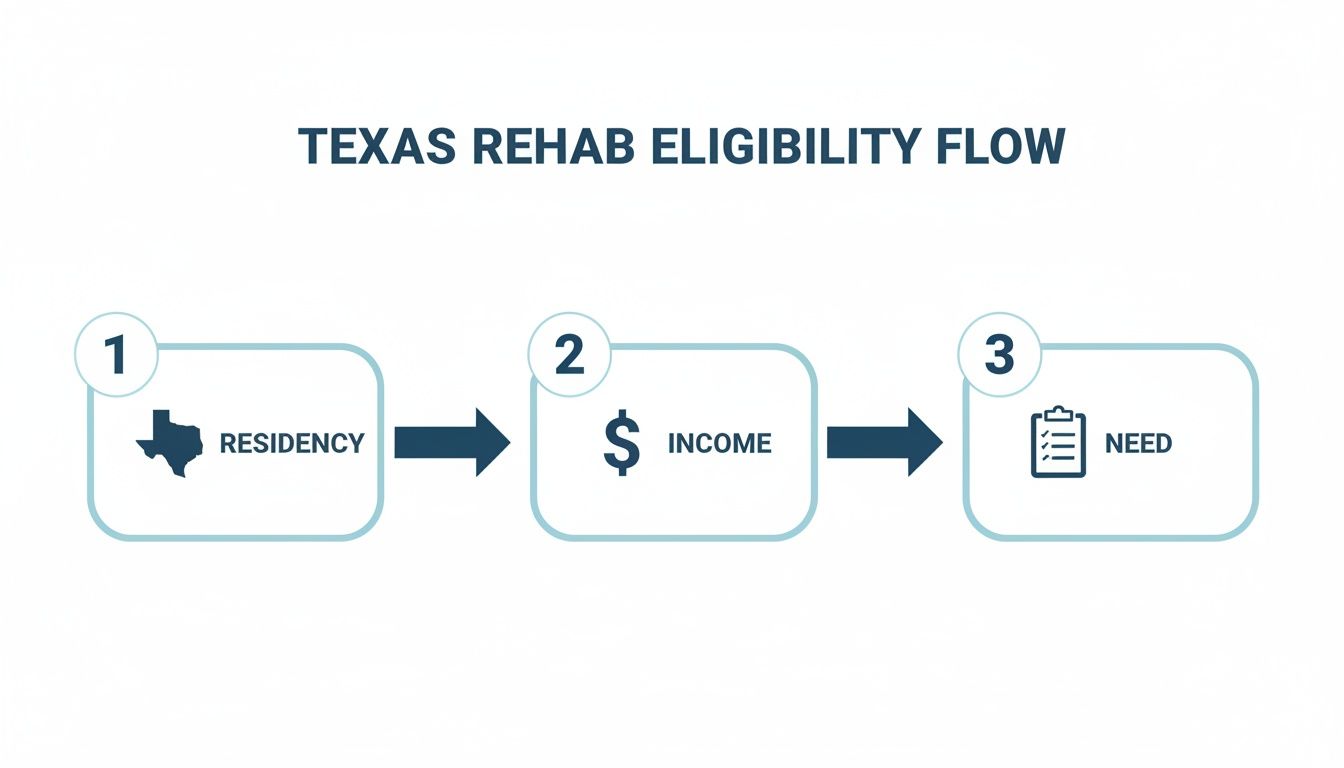
As you can see, confirming you're a Texas resident, meeting the income guidelines, and having a documented clinical need are the three pillars of qualifying for public programs.
What to Do About Waitlists
One of the tough realities of public funding is that the demand for help often exceeds the available resources. This can lead to waitlists, especially for residential treatment beds. Waiting for a spot is incredibly frustrating, but it’s crucial not to lose hope.
Your LMHA/LBHA can usually connect you with interim support, like outpatient counseling or peer support groups, to keep you on track while you wait. The key is to stay proactive. Keep in touch with your case manager and lean on community resources like 12-step meetings. This waiting period is a challenge, but it doesn’t have to be a dead end on your road to recovery.
Key Takeaways
- Your first step is always to contact your county's Local Mental Health Authority (LMHA/LBHA).
- Be prepared for an initial screening call to discuss your situation, residency, and finances.
- A formal clinical assessment will determine the appropriate level of care for your needs.
- Waitlists are a common reality, so it's important to ask about interim support services.
- Staying proactive and engaged with your case manager can help you navigate the process.
What Kind of Treatment Can I Expect in a State Program?

Once you’ve successfully navigated the application process for a state funded drug rehab in Texas, the next logical question is: what does the treatment actually look like? The good news is these programs are built on a solid, evidence-based foundation, focusing on the core services you need to get well.
Think of it as a full spectrum of care designed to meet you wherever you are in your recovery journey. The system is set up to start with the most intensive support and then gradually step down as you build stability and confidence. The whole point is to create a strong recovery, one step at a time.
The First Step: Medical Detox
For a lot of people, the journey has to begin with a medically supervised detox. This is the critical first phase where your body rids itself of drugs or alcohol, all while under the watchful eye of medical professionals. Withdrawal isn't just uncomfortable—it can be downright dangerous. Having that medical support is non-negotiable.
State-funded programs make sure this process is handled safely and with dignity. They monitor you and can provide medications to ease the worst of the withdrawal symptoms. It’s the essential starting block that prepares your mind and body for the real therapeutic work that lies ahead.
Inpatient and Outpatient Care Options
After detox, you’ll move into a more structured treatment program. Providers in Texas offer a few different levels of care to match what you need, giving you some flexibility depending on your life circumstances.
- Residential (Inpatient) Treatment: This is the most immersive option. You live at the facility, which allows you to shut out the noise and distractions of the outside world and focus completely on your recovery. Days are structured with individual therapy, group counseling, and educational classes.
- Outpatient Programs: If you have to keep up with work, school, or family, outpatient care might be the right fit. It provides structured treatment, but you get to live at home. The time commitment can range from just a few hours a week to more involved schedules.
- Intensive Outpatient Programs (IOP): This is a great middle-ground option. An IOP offers more therapy sessions per week than standard outpatient care but doesn't require you to live on-site. We have a helpful guide explaining what intensive outpatient treatment is if you want to learn more.
Specialized Treatments: Dual Diagnosis and MAT
Real, effective treatment today understands that substance use rarely happens in a vacuum. State programs in Texas are getting better and better at handling the complex issues that often come with it.
One of the most important services is dual diagnosis care. This is when a facility treats a co-occurring mental health condition—like depression, anxiety, or PTSD—at the same time as the substance use disorder. This is crucial because one condition almost always fuels the other. You have to treat both to get a lasting result.
Many state-funded facilities also provide Medication-Assisted Treatment (MAT). This approach uses FDA-approved medications like buprenorphine or naltrexone alongside behavioral therapies. These medications are incredibly effective at managing cravings and withdrawal symptoms, especially for people struggling with opioid or alcohol use.
This focus on integrated services gets at a core public health truth: treating the whole person, not just the symptoms of addiction, leads to far better outcomes for everyone involved.
The need for this kind of comprehensive care in Texas is staggering. For example, in Texas state jails, around 64% of inmates meet the criteria for a substance use disorder. Yet, only 19% of those facilities offer any kind of SUD treatment. This gap is a direct line to high recidivism rates and shows just how urgent the need for accessible care really is.
The Power of Peer Support
Beyond the clinical side of things, many state-funded programs incorporate peer support. This means you get connected with trained individuals who have been there themselves—they have real, lived experience with addiction and recovery.
These peer specialists offer guidance and encouragement from a perspective that a therapist simply can't. They’re living proof that getting better is possible, which can inspire a level of hope that makes all the difference. That feeling of shared experience is a powerful tool for building a solid foundation for sobriety.
Key Takeaways
- State-funded rehabs offer a full continuum of care, from medical detox to residential and various outpatient programs.
- You can often find essential services like dual diagnosis treatment for co-occurring mental health issues.
- Medication-Assisted Treatment (MAT) is becoming more common to help manage cravings for opioids and alcohol.
- The entire system is designed around evidence-based care to help you build a strong, long-term recovery.
- Peer support is a vital component, connecting you with people who have walked the same path.
What State Funding Really Means for Your Care
When you’re looking into state-funded drug rehab in Texas, it’s crucial to understand how the system actually works on the ground. These programs are an absolute lifeline for thousands of people, but it helps to go in with a clear-eyed view of the challenges they face. The simple truth is that public funding, while significant, has its limits.
This isn't a knock on the dedicated staff or the quality of treatment they provide. It's just a matter of supply and demand. Because these vital services are offered at little to no cost, the need often stretches the available resources thin. This reality can shape everything from how quickly you get a bed to the types of specialized programs on offer.
How Budget Limits Can Shape Your Rehab Experience
I often compare state funding to a public library. It provides essential books and resources for the entire community, which is incredible. But it might not have dozens of copies of the latest bestseller, and you might have to put your name on a waiting list to check it out.
Public rehab operates under a similar principle. Here’s what that can look like in practice:
- Waiting for a Spot: This is probably the biggest hurdle you'll encounter. With a fixed number of beds and program slots, waitlists are common, especially for inpatient or residential care.
- Full-Capacity Facilities: State-funded centers are almost always running at or near full capacity. This often means you'll have a roommate and your group therapy sessions might be on the larger side.
- Access to Niche Therapies: While all the core, evidence-based treatments are covered, you might find that highly specialized tracks or newer therapeutic approaches are less common than in the private sector.
Again, these points aren't about the quality of care—they're just the economic reality of a system designed to help a massive number of people with a wide range of needs.
A Quick Look at the Numbers
This isn't just a Texas issue; it's a national trend. The strain on public funding for addiction treatment has been growing for years. In fact, the percentage of treatment centers receiving any government funding dropped from over 60% in the early 2000s to just 52% by 2016—right as the overdose crisis was escalating.
Here in Texas, the demand is intense. The average cost for residential treatment is a staggering $56,623, much higher than the national average for publicly funded centers. That number reflects the immense pressure on services in metro areas like Dallas-Fort Worth, which are at the heart of the opioid and alcohol crises. You can dig deeper into the rising costs of rehab and the funding challenges in recent studies.
Knowing about these funding dynamics isn't meant to discourage you. It’s about empowering you. When you understand the landscape, you can be a better advocate for yourself, explore all your options, and set realistic expectations for the journey ahead.
Recognizing these realities helps explain why it can be so hard to find publicly funded recovery housing, even though we know it's a critical step for long-term sobriety. It just reinforces how important it is to pull every lever you can, from state programs to community support groups.
Key Takeaways
- State rehab funding is a lifeline, but it's finite, which can mean waiting for a spot.
- The high demand for free or low-cost treatment often outpaces the number of available beds.
- Budget constraints can influence things like facility capacity and access to specialized therapies.
- These are resource limitations, not a reflection on the quality of the clinical care you'll receive.
- A realistic perspective helps you advocate for your needs and explore every single path to recovery.
What to Do When State-Funded Rehab Isn't an Option
State-funded rehab programs in Texas are a lifeline for thousands, but let's be honest about the reality: high demand often means long waitlists. When you or someone you care about finally makes the decision to get help, being told to wait weeks—or even months—can feel like hitting a brick wall. That delay is more than just frustrating; it can be dangerous, especially when a person’s motivation to change is at its peak.
Sometimes, it's not just about the wait. The public system, while offering solid, evidence-based care, might not have the specific resources you need. You might be looking for intensive trauma therapy, specialized support for a complex dual diagnosis, or simply a smaller, more private setting to feel comfortable opening up. If you need help right now or require a more personalized approach, it’s time to explore other paths.
Private Rehab: A Critical Alternative
This is where private rehab centers come in. They aren't a replacement for the state system but rather a vital part of the bigger picture of recovery in Texas. Private facilities offer a different route for those who can access it, most often through PPO insurance, allowing them to bypass the long queues common in the public sector.
It’s not about one being "better" than the other. Think of it like this: you have different tools for different jobs. The same is true for recovery.
The biggest advantages of going the private route usually boil down to:
- Immediate Help: Most private centers can get someone admitted and started on treatment within 24 to 48 hours. This speed is crucial.
- More Personal Attention: A lower staff-to-client ratio is standard. That means more one-on-one time with therapists, doctors, and the entire support team.
- Truly Custom Care: With more resources on hand, the clinical team can design a treatment plan that’s built specifically around your history, struggles, and goals.
- Specialized Tracks: It’s much more common to find dedicated programs for things like co-occurring mental health disorders, past trauma, or even rehab for couples.
Filling the Gaps in Long-Term Support
One of the biggest hurdles in recovery is what happens after treatment. Safe, stable, and sober housing is absolutely essential for building a new life, but it's an area where public funding often falls short.
For example, in fiscal year 2024, the Texas Health and Human Services Commission set aside $10 million for substance-use housing. While that sounds like a lot, a shocking 218 of Texas' 254 counties have no designated recovery housing at all. This leaves massive parts of the state as "recovery deserts." For a closer look at this challenge, you can read more about Texas' recovery housing issues.
This is where the entire recovery community, private providers included, has to step up. Private centers typically have strong networks and prioritize creating a robust aftercare plan, which includes connecting clients with vetted sober living homes. Our guide to sober living homes in Texas explains just how important this step is for staying on track.
Private rehab isn’t here to replace the state system. It complements it, offering a different but equally valid path for those who need rapid, specialized care and can use PPO insurance to access it.
Key Takeaways
- Long waitlists are a real problem in the state-funded system, making private rehab a necessary option for immediate help.
- Private facilities typically offer more personalized treatment thanks to smaller group sizes and higher staff-to-client ratios.
- If you have a PPO insurance plan, you likely have access to specialized programs and amenities that aren't always available in public facilities.
- Significant gaps in public funding, especially for recovery housing, mean it's smart to explore every resource available.
- State and private systems work side-by-side, creating multiple pathways to recovery for people with different needs and resources.
Wrapping Up: Your Next Steps to Get Help
Finding the right path to recovery in Texas can feel overwhelming, but it really boils down to knowing where to start and what your options are. Think of this as your personal cheat sheet to guide you forward.
If you only remember a few things from this guide, make it these:
- Your LMHA is the Front Door: For any state-funded drug rehab in Texas, your journey begins with your Local Mental Health or Behavioral Health Authority (LMHA). They are the official gateway.
- Check Your Eligibility First: Before you get too far down the road, make sure you meet the state's requirements for residency, income, and clinical need. This will save you a lot of time and potential frustration.
- Be Prepared for a Wait: It's the unfortunate reality of publicly funded programs—waitlists are common. Having a solid support plan in place while you wait is absolutely crucial.
- Know What's Included: State programs cover the essential, life-saving services like detox and therapy. Just be aware that they typically don't offer the same level of amenities you might find in a private facility.
- Don't Rule Out Other Options: If you have private insurance or the waitlist is simply too long, looking into private treatment isn't giving up—it's just taking a different, often faster, road to the same destination.
Key Takeaways
- State-funded rehab in Texas is often free or very low-cost if you have a low income.
- Many programs use a sliding scale fee, so what you pay is based on what you can afford.
- High-risk individuals, especially pregnant women, are prioritized for open spots.
- If you have PPO insurance, a private rehab center is almost always your best and quickest option.
- Your first step for public help should always be contacting your Local Mental Health Authority (LMHA) to see what you qualify for.
Frequently Asked Questions
When you're trying to figure out state-funded drug rehab in Texas, it’s natural to have a lot of questions. Let's walk through some of the most common ones to clear things up.
What Does State-Funded Rehab in Texas Actually Cost?
This is the biggest question on most people's minds. While many state-funded programs are free for those who qualify, others use what's called a sliding scale fee.
Simply put, the amount you pay is based on your income. If you have very little or no income, your treatment will likely be completely free. The whole point is to make sure money isn't the reason someone can't get the help they desperately need.
Who Gets Priority for a Spot?
Because the need for these services is so high, the state has to prioritize who gets in first. They focus on getting the most vulnerable individuals into treatment as quickly as possible.
Typically, the people who move to the top of the list are:
- Pregnant women who use IV drugs
- All other pregnant women
- Individuals who use IV drugs
- People who are involved with the criminal justice system
What if I Have Private Insurance?
If you have a PPO insurance plan, you likely won't qualify for a state-funded spot. Those programs are really there to act as a safety net for people who don't have other options.
But here's the good news: having private insurance means you can get into a private treatment facility right away. Places like ours can check your benefits and usually get you admitted within 24-48 hours, which lets you skip the long waitlists common in the public system. It’s a much faster path to getting the personalized care you need.
Remember, the existence of both public and private systems creates more pathways to recovery. If one door isn't the right fit, another one is likely available to help you start your journey.
Can I still qualify if I have a job?
Yes, you absolutely can. Eligibility is based on your income level, not your employment status. Many Texans who work low-wage jobs meet the financial criteria for state-funded assistance. You'll likely need to provide recent pay stubs or tax documents to verify your income.
What should I do if I’m on a waitlist?
Staying proactive is key. Maintain regular contact with your case manager at the LMHA for updates. They can often direct you to interim services like outpatient counseling or peer support groups. This is also a great time to begin building a recovery support network by attending community meetings like AA or NA.